
The best humectants for skin are ingredients that attract and hold water, helping your skin stay hydrated, balanced and resilient.
Humectants work by drawing moisture from the environment and deeper layers of the skin into the outermost layer, where hydration is most visible.
Common humectants include:
- Glycerin
- Sodium PCA
- Sodium hyaluronate
- Betaine
- Propanediol
Unlike oils or creams, humectants don’t sit on the surface. They actively increase the water content within your skin, which is what gives skin that healthy, plump look.
How do humectants hydrate the skin?
Humectants bind to water molecules and pull them into the skin.
Once applied to skin humectants:
- Attract water into the outer skin layers
- Increase hydration levels
- Improve elasticity and bounce
- Reduce tightness and dullness
This process supports your skin’s Natural Moisturising Factor (NMF), which is responsible for keeping skin hydrated and functioning properly.
Without humectants, your routine may moisturise—but it won’t truly hydrate.
Hydration vs moisturising: what’s the difference?
This is one of the most important distinctions in skincare.
Hydration = water
Moisturising = sealing that water in
You can apply the richest moisturiser, but if your skin lacks water, it will still feel dry, tight or uncomfortable.
This is why many people say:
“I use moisturiser but my skin still feels dry”
What they’re missing is hydration.
Humectants solve this by delivering water into the skin, while oils and creams help keep it there.
Dehydrated skin vs dry skin: why it matters
Understanding this difference can completely change your routine.
Dehydrated skin
- Lacks water
- Can feel tight and look dull
- Can still be oily or acne-prone
- Needs humectants
Dry skin
- Lacks oil
- Feels rough or flaky
- Needs lipids and richer creams
Most people dealing with breakouts, sensitivity or redness are actually experiencing dehydrated skin, not dry skin. For more info read our guide on Dry vs Dehydrated Skin: How to Tell the Difference & What to Do
Which is why humectants are essential.
The best humectants for skin (and why they work)
Glycerin
Glycerin is one of the most effective and widely used humectants in skincare.
It:
- Draws water into the skin
- Strengthens the skin barrier
- Improves smoothness and softness
It’s gentle, non-irritating and works for all skin types, including sensitive and acne-prone skin.
If there’s one ingredient that consistently delivers hydration, it’s glycerin.
Sodium PCA
Sodium PCA is naturally found in your skin as part of its Natural Moisturising Factor.
It:
- Helps maintain optimal hydration levels
- Prevents water loss
- Supports barrier repair
Because it’s already present in the skin, it’s highly compatible and effective.
It hydrates without heaviness, making it ideal for reactive or congested skin.
Sodium Hyaluronate (Hyaluronic Acid)
A smaller, more absorbable form of hyaluronic acid.
It:
- Holds up to 1000 times its weight in water
- Plumps the skin
- Smooths the appearance of fine lines
It provides both instant and long-term hydration, making it a staple in modern skincare.
Betaine
A gentle, plant-derived humectant that:
- Hydrates and soothes
- Reduces irritation
- Helps maintain balance
It’s particularly beneficial for sensitive or inflamed skin.
Propanediol and Pentylene Glycol
These multifunctional ingredients:
- Enhance hydration
- Improve absorption
- Keep formulations lightweight
They help deliver hydration without clogging pores or overwhelming the skin.
Humectants vs emollients vs occlusives
This is where everything comes together.
Humectants
- Attract water into the skin
- Examples: glycerin, sodium PCA
Emollients
- Smooth and soften the skin
- Examples: oils, fatty acids
Occlusives
- Seal moisture in
- Examples: balms, heavier creams
For healthy skin, you need all three—but in balance.
Humectants are the starting point.
Why your skin might still feel dry (even with skincare)
If your skin feels:
- Tight after cleansing
- Rough or uneven
- Oily but dehydrated
It’s likely lacking water.
Common causes include:
- Over-cleansing
- Harsh actives
- Environmental stress
- Skipping hydrating steps
Adding humectants back into your routine helps restore balance.
The link between hydration and your skin barrier
Your skin barrier relies on both water and lipids.
When hydration levels are low:
- The barrier weakens
- Sensitivity increases
- Redness becomes more visible
- Breakouts take longer to heal
Humectants provide the hydration your barrier needs to function properly.
This is why hydration is a key step in any barrier-first routine.
How to use humectants properly for best results
To get the most out of humectants:
- Apply to slightly damp skin
- Use after cleansing
- Follow with an oil or moisturiser
- Use morning and night
This ensures hydration is drawn into the skin and then sealed in.
Why more products don’t equal more hydration
Layering multiple hydrating products can feel productive.
But too many layers can:
- Overwhelm the skin
- Cause pilling
- Disrupt balance
A well-formulated product with the right combination of humectants is often more effective than a complex routine.
A balanced approach to hydration
This is where formulation matters.
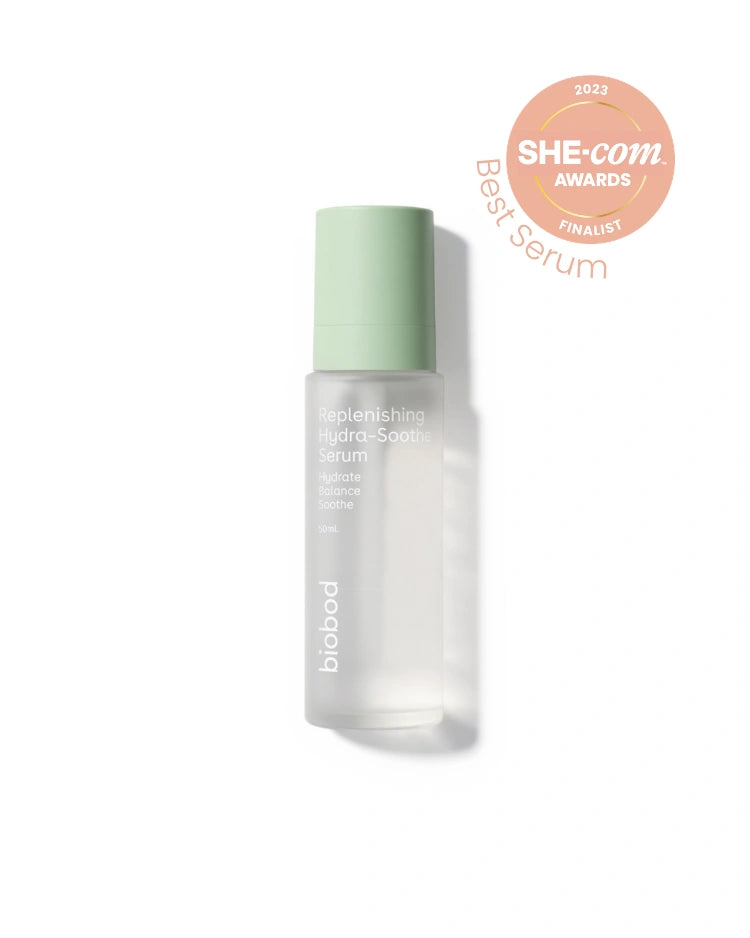
The Replenishing Hydra-Soothe Serum is designed to deliver hydration in a way that feels calm, not overwhelming.

It combines:
- Glycerin for deep hydration
- Sodium PCA to support natural moisture levels
- Sodium hyaluronate for plumping
- Betaine and aloe to soothe
- Centella and green tea to calm
Alongside prebiotics and postbiotics, it helps support the microbiome while restoring hydration.
The result is skin that feels:
- Calm
- Balanced
- Comfortable
A balanced approach to hydration
This is where formulation matters.
The Replenishing Hydra-Soothe Serum is designed to deliver hydration in a way that feels calm, not overwhelming.
It combines:
- Glycerin for deep hydration
- Sodium PCA to support natural moisture levels
- Sodium hyaluronate for plumping
- Betaine and aloe to soothe
- Centella and green tea to calm
Alongside prebiotics and postbiotics, it helps support the microbiome while restoring hydration.
The result is skin that feels:
- Calm
- Balanced
- Comfortable
Why humectants are essential for acne-prone skin
Hydration is often overlooked in acne routines.
But dehydration can:
- Trigger excess oil production
- Increase inflammation
- Slow healing
Lightweight, water-based hydration helps rebalance the skin without clogging pores.
Humectants provide hydration without heaviness, making them ideal for acne-prone skin.
Signs your skin needs more hydration
Your skin may need humectants if you notice:
- Tightness after washing
- Fine lines appearing suddenly
- Makeup sitting unevenly
- Increased sensitivity
- Dull or tired-looking skin
These are all signs of dehydration, not necessarily dryness.
The less is more approach to hydration
Healthy skin doesn’t come from doing more.
It comes from doing what your skin actually needs.
A simple routine:
- Gentle cleanser
- Hydrating serum (humectants)
- Barrier support (oil or moisturiser)
This approach supports the skin without overwhelming it.
The best humectants for skin are not about trends or hype.
They are about function.
Ingredients like glycerin, sodium PCA and sodium hyaluronate work because they support what your skin naturally needs—water.
When your skin is properly hydrated:
- It feels calmer
- Looks healthier
- Functions better
And everything else in your routine becomes more effective.
What are the best humectants for skin?
Glycerin, sodium PCA and sodium hyaluronate are among the most effective humectants for hydrating and supporting the skin barrier.
Are humectants good for acne-prone skin?
Yes. They provide lightweight hydration that helps balance oil production without clogging pores.
Can I use humectants every day?
Yes. Humectants are safe for daily use and are essential for maintaining healthy skin hydration.
Do humectants replace moisturiser?
No. Humectants hydrate the skin, while moisturisers and oils help seal that hydration in.