
Last updated: July 2026 · Estimated reading time: 12 minutes
Lisa Walker from Eir Women
Personal Journey & Motivation
1. Lisa, can you share a bit about your background and what inspired you to co-found Eir Women? What personal experiences influenced you to start a wellness brand for women over 40?
My background is in building consumer brands, and many years of yoga and fitness teaching - but Eir Women came from a very personal place. In my early 40s, I started noticing changes I couldn’t quite explain… lower energy, disrupted sleep, mood shifts, weight changes that didn’t respond the way they used to. What really stood out to me wasn’t just the symptoms, but how it affected all aspects of my life (and those around me.)
I was doing all the things I’d always done to look after myself, yet my body was clearly asking for something different. When I went looking for answers, I found a lot of noise, very little clarity, and not much that truly spoke to women at this stage of life. Eir Women was born from that gap, the need for science-backed support that actually reflects what women over 40 are experiencing.
2. How did your own mid-life transition (perimenopause / menopause) shape your vision for Eir Women — both in terms of products and the message you want to send to other women?
Perimenopause changed how I relate to my body. I could no longer ignore signals or push through fatigue the way I once did. That experience shaped Eir Women in a big way. Our products are designed to support the body gently and intelligently, not overwhelm it or force it in one direction.
Just as important is the message. I want women to feel informed, supported and confident navigating this phase — not confused or dismissed. This stage of life can be powerful when you understand what’s happening and have the right tools to work with your body.

3. Outside of being a founder, who is Lisa Walker on her “off-duty” days? What does self-care look like for you when you’re not working?
Off-duty, I’d like to think I’m much slower and more intentional (but not likely). I’m a mum of teen boys, love being outside and have a laser focus on good sleep. I’m active every day, either walking, at the gym, yoga or pole dancing. Plus I’m studying my masters in Wellbeing (Positive Psychology). Self-care for me now is practical — it’s protecting my energy, keeping things simple when I can, and giving myself permission to rest when I need it. It’s less about indulgence and more about sustainability.
On Perimenopause, Menopause & Skin + Wellness Care
4. From your own experience, what were the first signs you noticed when you entered perimenopause — physically, emotionally, and in terms of your skin?
Emotionally, I became more sensitive to stress and less tolerant of constant pressure. With my skin, dryness appeared first, followed by subtle changes in elasticity and texture. Things just didn’t behave the way they used to…or how I wanted them to.
5. We know hormonal shifts during perimenopause can significantly affect the skin — dryness, reduced elasticity, uneven tone, sensitivity. How did you adapt your skincare and self-care routine once these changes began?
I simplified everything. I focused on fewer products, better ingredients, and consistency. Hydration became non-negotiable, and I paid much more attention to ensuring I was using products that supported this. I also realised skincare alone isn’t the answer — sleep, stress, nutrition and hormones all show up on your skin, especially during perimenopause.
6. As someone who values science-backed wellness, did you find any particular lifestyle shifts (diet, hydration, stress-management, sleep) especially helpful in navigating skin changes during perimenopause?
Sleep, sleep sleep. It’s foundational — without it, nothing else works properly. I increased my protein intake, stayed on top of hydration, and became far more mindful of stress. Even small changes, like meditation, exercising regularly and reducing unnecessary pressure, made a noticeable difference to both my skin and overall wellbeing.
Lisa’s self-care thread: sleep, hydration, movement, stress support and skincare consistency.
7. Were there any skin concerns unique to your journey: hormonal acne, sensitivity, dryness, pigmentation and how did you address them?
Dryness is the biggest one for me. I leaned into gentle, supportive formulations and avoided anything too harsh. I also had to accept that my skin now needs different care than it did in my 30s. I keep it pretty simple, but targeted.

On Eir Women Philosophy & Mission
8. Eir Women emphasises “science with heart” — using clinically backed ingredients, responsibly sourced, targeting real mid-life needs. How do you balance scientific rigour with empathy and real-world female experience when developing your formulas?
Science always comes first - clinical research, effective dosages, and ingredient integrity are non-negotiable. But we also look at everything through a real-life lens. Will this genuinely support a woman who’s tired, busy, and juggling a lot? Is it practical? Is it respectful of her body? We’re designing for ourselves, so that helps a lot!
9. What does “mid-life health and happiness” mean to you personally — beyond just managing symptoms? And how do you hope Eir Women influences societal perceptions of perimenopause/menopause? I noticed you recently wrote about reframing perimenopause as a time of strength, not decline.
For me, it’s about feeling steady and at ease in your body. Women have told us that overwhelm from the mental load of life is their biggest concern. Having the energy to show up for your life and the clarity to enjoy it becomes key. Mid-life health and happiness are built on strong foundations: sleep, nourishment, movement, and feeling supported rather than overwhelmed. I’d love to see perimenopause spoken about more openly and with more optimism.
Balancing Work, Health & Life
10. Running a wellness brand while navigating your own perimenopause sounds like a lot. How do you manage the balance between work commitments (product development, business, community) and your own self-care, health and personal life?
I’m not sure that I have that balance right, but I’m trying. I’ve learned to work with my energy rather than against it. I no longer believe that being constantly busy is a sign of success. Some days are high-output, others are quieter, and both are important.
11. What are some daily or weekly rituals that you swear by to keep grounded — mentally, physically, and emotionally?
Morning light, meditation, movement, hydration and consistent sleep. I also check in with myself regularly — not just what needs to be done, but how I’m feeling. I do spend a lot of time in self-reflection. That awareness has been a game-changer.

On Self-Care & Favourite Products (Including Biobod)
12. If you could choose just one Biobod product that you think is particularly helpful for women in perimenopause or menopause — which would it be and why?
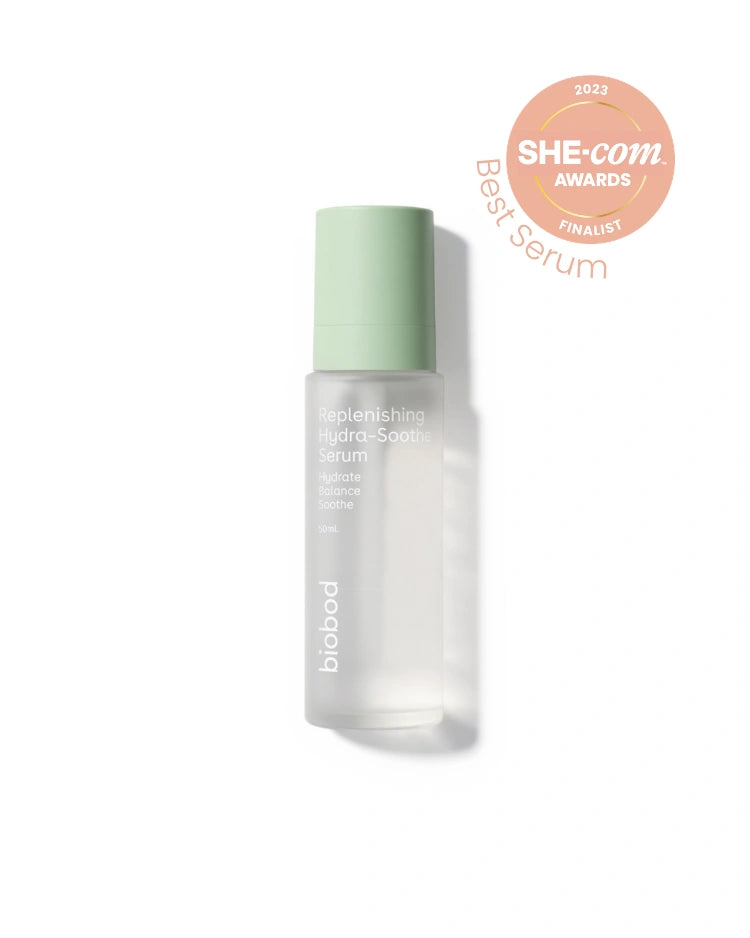
The Replenishing Hydra-Sooth Serum. I’ve been using it every day (so does my teen boy, who has acne). It’s light, but super hydrating without feeling like my skin is clogged, and plays well with other products.
13. How do you define “self-care” now compared with when you were younger? Has your mindset shifted since entering this life stage?
It’s much more grounded now. Even though I had a yoga background, it was much more physical. As I’ve gotten older, and after becoming a widow I’ve become more in tune with the mental benefits of both yoga and meditation. Now it’s something I build my life around — sleep, boundaries, nourishment, and emotional honesty all matter.
Advice & Wisdom for Women Entering Perimenopause
15. For women who are just starting to notice perimenopause symptoms — emotionally or physically — what would be your top pieces of advice (skin care, lifestyle, mindset)?
Learn early, ask questions, and advocate for yourself. Focus on the basics — sleep, nutrition, stress management and hormone support — before symptoms become overwhelming. And trust what you’re noticing. Your body is giving you valuable information.
16. Many women feel anxious or uncertain when their body and skin change. How can they approach this transition with kindness and curiosity rather than fear?
By shifting from judgement to curiosity. Instead of asking “what’s wrong?”, ask “what’s changing, and what do I need now?” That mindset alone can ease so much anxiety.

17. What’s one mindset or daily habit that helped you embrace this phase with strength and ease?
Meditation. Listening. Paying attention to what my body is asking for, and actually doing something about it.
18. Finally — in your own words, how would you describe your journey through perimenopause so far, and how has it changed how you view self-care, ageing, and empowerment?
It’s been eye-opening, challenging at times, but ultimately empowering. At 51 I’m a different person than I was 10 years ago. It’s changed how I think about ageing, success and self-care. I feel more grounded, more intentional, and more connected to myself than ever before, and that’s been an unexpected gift.
Explore Lisa’s Biobod favourite: The Replenishing Hydra-Soothe Serum is a lightweight hydrating step for skin that wants comfort without heaviness.