
Last updated: September 2026 · Estimated reading time: 7 minutes
By Natalie, Founder of biobod
You can have a beautifully formulated serum and a lovely face oil and still feel like something is not quite working. Often, the products are fine. It is the order, the timing or the amount that needs adjusting.
Layering sounds technical, but it comes down to a few simple rules. Get them right and your skin feels soft and comfortable without heaviness. Get them wrong and the same products can leave you tight, shiny or pilling under sunscreen.
Here is exactly how to layer a serum and face oil, where oil fits if you still use a moisturiser, and the small details that make the biggest difference.
Key takeaways
- Layer from thinnest to richest, and water-based before oil-based.
- Face oil goes after serum and after moisturiser. Sunscreen always goes last in the morning.
- Apply serum to damp skin and oil within a minute or two, before your skin dries out.
- Press or pat oil into the skin rather than rubbing it in.
- Start with two to three drops and adjust to your skin and the season.
- Face oil can be used morning and night, every day.
Table of contents
- What goes first, face oil or moisturiser?
- Why the order matters
- How to layer serum and face oil, step by step
- What is the 3-minute rule?
- How to apply facial oil correctly
- When is the best time to apply face oil?
- Can you use face oil every day?
- If you still use a moisturiser
- Common layering mistakes
- Recommended biobod products
- FAQs
What goes first, face oil or moisturiser?
Moisturiser goes first. Face oil goes after it.
The general rule of layering is thinnest to richest, and water-based before oil-based. A moisturiser contains water, so it belongs underneath. A face oil contains no water, so it belongs on top, as the final step of your skincare before sunscreen.
If you have replaced your moisturiser with a serum, the same logic applies: serum first, oil second.
Why the order matters
Oil and water do not mix. When you apply an oil first, it leaves a light lipid layer on your skin. Water-based products applied over the top tend to sit on that layer and spread less evenly.
Put the water-based step first and it can settle into the skin without anything in the way. The oil then goes on top to soften the skin and help hold that hydration in.
That is why, in a serum and oil routine, each product has a clear job: the serum hydrates and the oil nourishes. For more on how the two formats differ, read face oil vs moisturiser: what's the difference?
How to layer serum and face oil, step by step
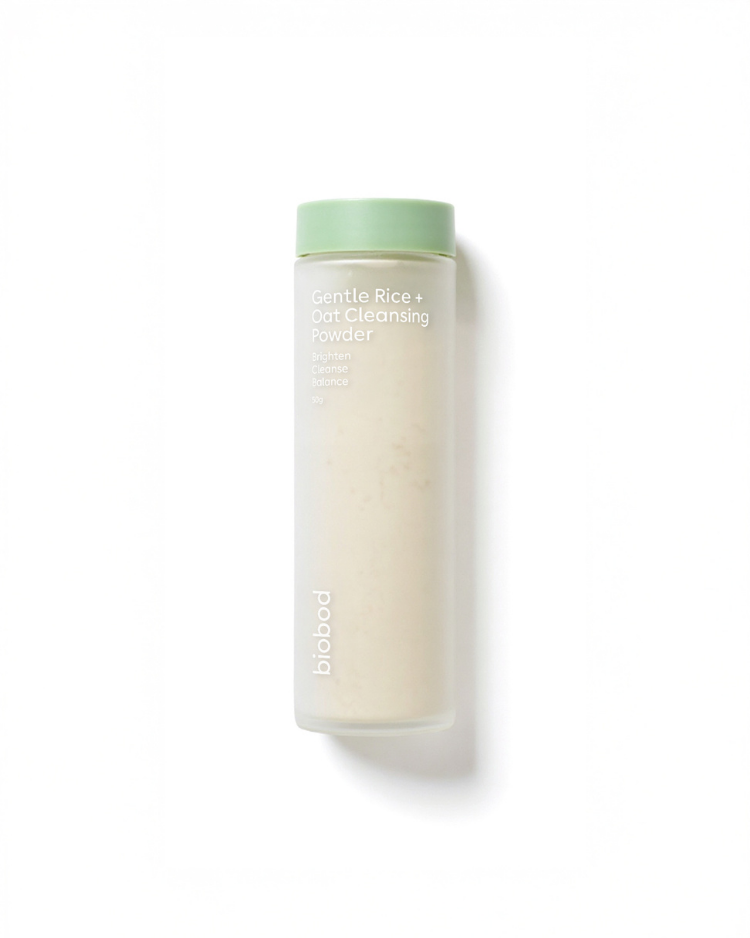
- Cleanse gently. Use a non-stripping cleanser and lukewarm water. If you use a powder cleanser, our guide to how to use a powder face wash walks through it.
- Leave your skin damp. Pat lightly with a towel so skin is moist, not dripping.
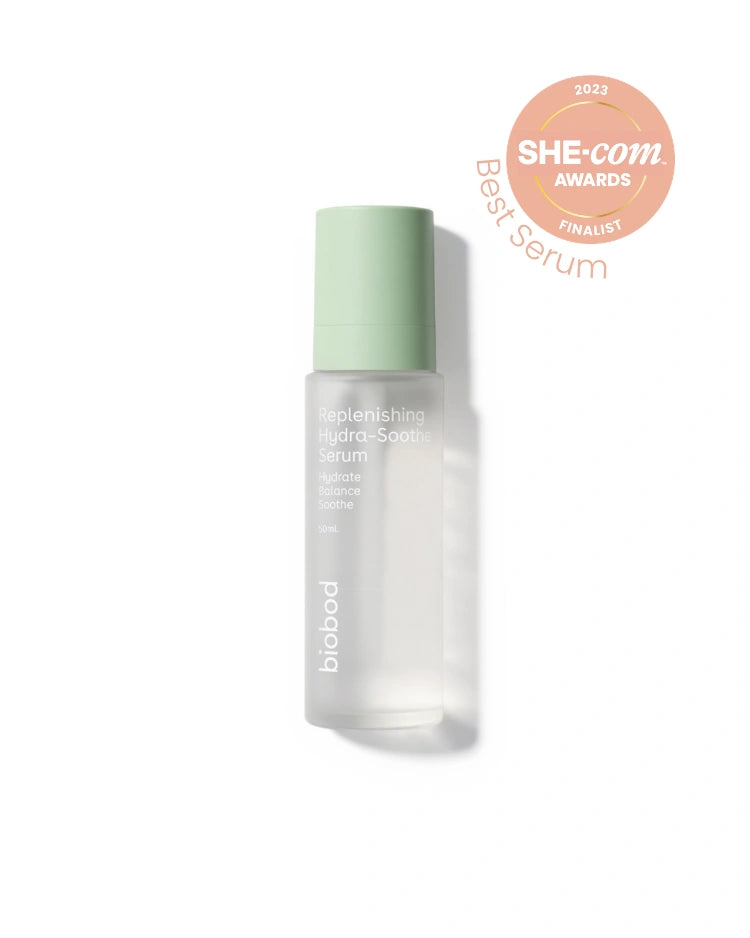
- Apply your serum. Press two to three pumps of a water-based serum, such as the Replenishing Hydra-Soothe Serum, over your face and neck.
- Pause briefly. Wait 30 to 60 seconds, until the serum feels settled but your skin has not fully dried.
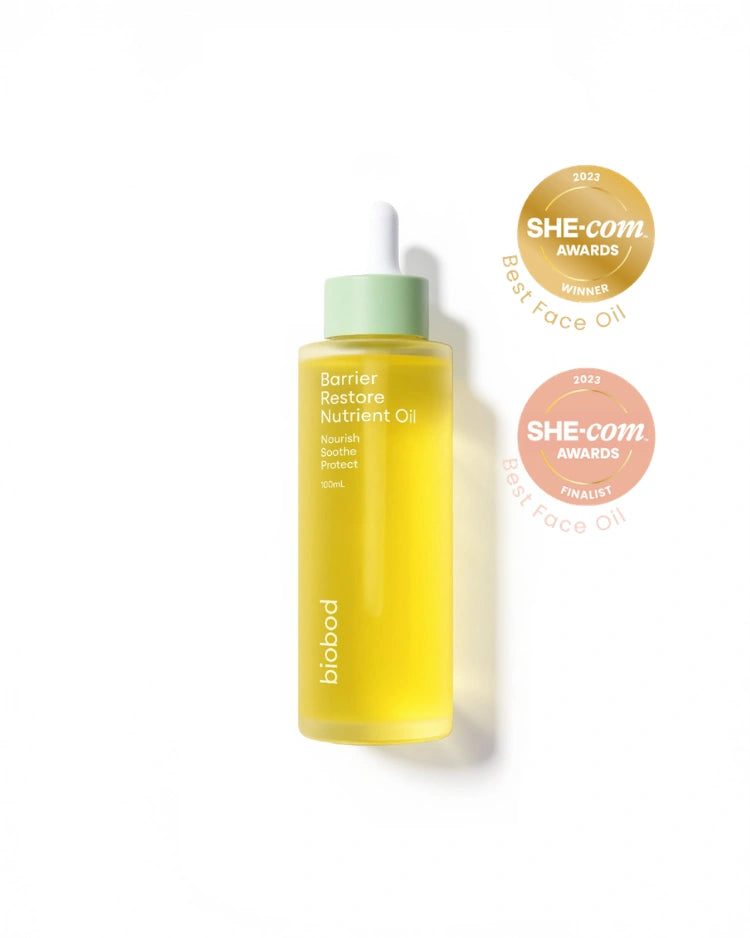
- Warm the oil. Place two to four drops of face oil, such as the Barrier Restore Nutrient Oil, in your palms and rub them together.
- Press it in. Pat and press your palms over your face, then smooth any remainder down your neck.
- Finish with sunscreen in the morning. Give the oil a few minutes to settle before applying SPF.
| Step | Morning | Evening |
|---|---|---|
| 1. Cleanse | Gentle cleanse or a splash of water | Gentle, thorough cleanse |
| 2. Hydrate | Serum on damp skin | Serum on damp skin |
| 3. Nourish | Two to three drops of oil | Three to five drops of oil |
| 4. Protect | Sunscreen | Not needed |
Cancer Council Australia recommends an SPF50 or SPF50+, broad-spectrum, water-resistant sunscreen whenever UV levels are 3 or above.
What is the 3-minute rule?
The 3-minute rule is a simple guideline: apply your hydrating and moisturising products within about three minutes of washing, while your skin is still damp.
Once water sits on the skin's surface, it starts to evaporate. As it does, skin can feel tighter than before you washed. Applying your serum and oil while skin is still damp makes the most of that surface water and helps your skin hold on to it.
In practice, that means keeping your serum and oil within reach of the basin, rather than leaving them for later.
We explain the hydrate-then-seal method in more depth in how to retain moisture in skin naturally.
How to apply facial oil correctly
A few details change how an oil feels on your skin:
- Warm it first. Rubbing the oil between your palms helps it spread in a thin, even layer.
- Press, do not rub. Patting and pressing leaves less residue and avoids tugging at the skin.
- Start small. Two to three drops is enough for most faces. Add one more if your skin still feels tight.
- Include your neck. Smooth any remaining oil down your neck and chest.
| If your skin feels | Starting point |
|---|---|
| Oily or prone to shine | One to two drops, or oil at night only |
| Balanced or combination | Two to three drops |
| Dry, tight or mature | Three to five drops |
If you enjoy facial massage, a few extra drops of oil give a tool such as the Skin Reformer Gua Sha the slip it needs to glide without tugging.
When is the best time to apply face oil?
You can use face oil morning and night. The best time is straight after your serum, while your skin is still slightly damp.
- Morning: use a lighter amount so it settles well under sunscreen and makeup.
- Evening: use a little more. There is no sunscreen or makeup to layer over, and many people prefer a richer feel overnight.
If you are new to face oils, starting at night only is an easy way to get to know how your skin responds.
Can you use face oil every day?
Yes. A well-formulated, fragrance-free face oil can be used every day, morning and night. The Barrier Restore Nutrient Oil is designed for twice-daily use as the final step in your routine.
Adjust the amount rather than the frequency. Use fewer drops on humid days and more when heating, air-conditioning or cooler weather leaves your skin feeling tight.
If you still use a moisturiser
You do not need to give up your moisturiser to use a face oil. The order is:
- Cleanse
- Serum (optional)
- Moisturiser
- Face oil
- Sunscreen (morning)
You can also mix one or two drops of oil into your moisturiser in your palm. If you find the oil is doing most of the work, read can you use face oil instead of a moisturiser? for how to make the switch.
Common layering mistakes
Myth: Layering more hydrating products means more hydration.
Fact: Stacking a hydrating toner, essence and serum without anything to help hold that water in can leave skin feeling tight once it evaporates. One hydrating step, followed by an oil, is often more comfortable than three hydrating steps on their own.
- Applying oil to dry skin. Oil has little water to hold in. Apply it to damp skin or over serum.
- Putting oil before serum. The serum then struggles to spread evenly. Water-based first, oil last.
- Using too much. Excess oil sits on the surface and can cause pilling under sunscreen.
- Rushing sunscreen. Give the oil a few minutes to settle before SPF.
- Changing everything at once. Introduce one new product at a time so you can see how your skin responds.
If you notice stinging, redness or irritation, stop the new product. If it persists, speak with your GP or a dermatologist.
Recommended biobod products
Layer 1: Hydrate
Replenishing Hydra-Soothe Serum

Best for: The first layer, pressed into damp skin.
A weightless, oil-free, fragrance-free serum with hyaluronic acid, sodium PCA and glycerin.
Explore the SerumLayer 2: Nourish
Barrier Restore Nutrient Oil

Best for: The final step, pressed over serum.
A waterless, fragrance-free and essential oil-free blend of squalane and plant oils.
Explore the OilBoth layers together
Glow Set: Hydrate & Nourish

Best for: A complete two-step routine with no moisturiser needed.
The full-size serum and oil, designed to be layered together.
Explore the Glow SetRelated reading
- Do I Need a Face Oil If I Already Use Moisturiser?
- Can You Use Face Oil Instead of a Moisturiser?
- Face Oil vs Moisturiser: What's the Difference?
- How to Retain Moisture in Skin Naturally
- How to Use a Powder Face Wash
- Non-Stripping Cleanser: The Secret to Healthy Hydrated Skin
FAQs
What goes first, face oil or moisturiser?
Moisturiser goes first and face oil goes after it. Layer water-based products before oil-based ones, from thinnest to richest. Face oil is the final skincare step, followed only by sunscreen in the morning.
Should you use face oil after moisturiser?
Yes. If you use both, apply face oil after moisturiser so the water-based cream can settle first. You can also mix one or two drops of oil into your moisturiser before applying.
What is the 3-minute rule for moisturiser?
The 3-minute rule means applying your hydrating and moisturising products within about three minutes of washing, while skin is still damp. This helps your skin hold on to surface water before it evaporates.
What is the best time to apply face oil?
Apply face oil straight after your serum, while skin is still slightly damp. It can be used morning and night: a lighter amount in the morning before sunscreen, and a little more in the evening.
How do you apply facial oil correctly?
Warm two to four drops between your palms, then press and pat them over your face and neck rather than rubbing. Apply over damp skin or a water-based serum, and give the oil a few minutes to settle before sunscreen.
Can I use face oil every day?
Yes. A fragrance-free face oil can be used every day, morning and night. Adjust the number of drops to your skin and the weather rather than skipping days.
Good layering is not about more products. It is about the right order, the right timing and the right amount.
Damp skin, a hydrating serum and a few drops of oil pressed over the top: that is the whole routine.
Layer it right: Explore the Glow Set: Hydrate & Nourish, or try the serum and oil in trial sizes with the Discovery Set.