
Last updated: July 2026 · Estimated reading time: 7 minutes
The fastest way to take plastic out of your skincare routine is to start at the sink. A traditional liquid cleanser usually comes with a bottle, pump, cap and label. Use it up, replace it, repeat. A zero waste face wash removes or reduces that packaging by changing the format entirely.
For sensitive skin, though, the question is not just “which cleanser uses less plastic?” It is “which cleanser will leave my skin feeling clean, soft and comfortable?” That is where solid cleansing bars and powder cleansers become interesting. Both can reduce packaging waste, but they feel very different to use.
Key takeaways
- A zero waste face wash reduces or removes single-use plastic cleanser packaging.
- Solid cleansing bars are usually the lowest-waste option because they do not need a bottle.
- Powder cleansers are waterless until activated, which can reduce product and packaging waste.
- For sensitive skin, soap-free, fragrance-free and non-stripping formulas matter more than the format alone.
- The best choice comes down to texture preference, storage and how you like to cleanse.
Table of contents
- What is a zero waste face wash?
- Why start with cleanser?
- Option 1: solid cleansing bar
- Option 2: powder cleanser
- Recommended zero waste face wash options
- Cleanse bar vs powder cleanser comparison
- Which is better for sensitive skin?
- How to use each format
- Common mistakes to avoid
- FAQs
What is a zero waste face wash?
A zero waste face wash is a cleanser designed to reduce single-use packaging, especially plastic bottles and pumps. In skincare, “zero waste” is often used to describe products that avoid unnecessary packaging, ship in lower-waste formats or replace disposable bathroom items.
The most common zero waste face wash formats are solid cleansing bars and water-activated powder cleansers. A solid bar removes the bottle entirely. A powder cleanser ships dry and becomes creamy or milky when mixed with water in your hands.
Why start with cleanser?
Cleanser is one of the easiest skincare steps to make lower waste because it is used daily and replaced regularly. If your cleanser comes in a plastic bottle, that packaging becomes part of your routine again and again.
Switching to a cleansing bar or powder cleanser can remove the bottle without adding more steps. It is a practical swap, especially if you want to take part in Plastic Free July without overhauling your entire skincare shelf.
For sensitive skin, cleansing is also one of the most important steps to get right. A cleanser should leave skin feeling fresh and comfortable, not tight, squeaky or stripped.
Option 1: solid cleansing bar
A solid cleansing bar is the most straightforward zero waste face wash format. It looks simple, stores easily and removes the need for a plastic cleanser bottle.
The key is choosing a bar made for facial skin. Traditional soap can be too harsh for some people, especially if the skin already feels dry or reactive. A soap-free, pH-balanced cleansing bar is different. It is formulated to cleanse without the same tight feeling many people associate with soap.
Biobod’s Calming Balance Cleanse Bar is soap-free, fragrance-free and pH-balanced to around 5.5. It is designed for sensitive-feeling skin and arrives in zero plastic packaging. Pair it with the Cleanse Bar Rest to help keep the bar dry between uses.
Best for
- People who want the lowest-waste cleansing option.
- Simple routines with fewer moving parts.
- Replacing a bottled liquid cleanser.
- Travel-friendly skincare.
Good to know
A cleansing bar lasts best when it dries properly between uses. Do not leave it sitting in water. A dry rest helps protect the texture and extends the life of the bar.
Option 2: powder cleanser
A powder cleanser is a dry cleanser that activates with water. You pour a small amount into damp hands, add a little water and work it into a soft cleansing milk or paste before massaging onto the skin.
Powder cleansers are loved by people who like to control texture. More water creates a softer, milkier cleanse. Less water creates a creamier texture. Because the product is dry until you activate it, you can use only what you need each time.
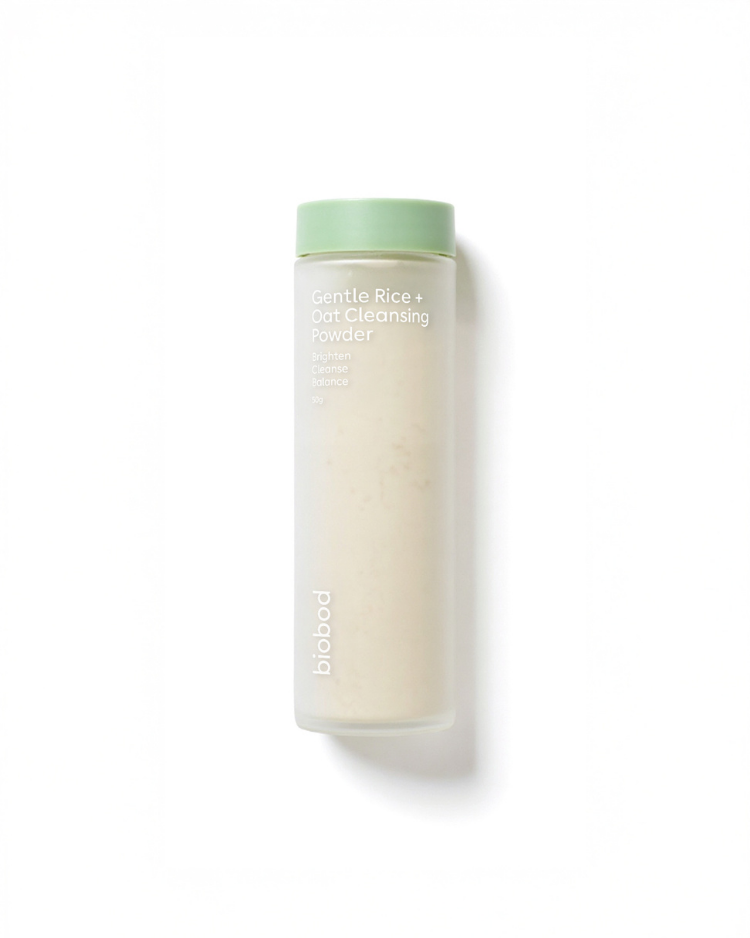
Biobod’s Gentle Rice & Oat Cleansing Powder is a water-activated powder cleanser made for gentle cleansing. It is a lovely option for people who prefer a soft, customisable cleanse and want a lower-waste alternative to traditional liquid cleansers.
Best for
- People who enjoy a ritual-style cleanse.
- Those who like controlling texture and amount.
- Low-waste skincare routines.
- Skin that prefers a soft, non-stripping cleansing feel.
Good to know
Powder cleansers take a wash or two to get used to. The secret is water. Start with damp hands, sprinkle in the powder, add a few more drops of water and gently rub your hands together until the texture softens before applying to your face.
Recommended zero waste face wash options
Choose the format that suits the way you naturally cleanse. Both options reduce packaging compared with a traditional bottled cleanser, but they feel different on the skin.

Zero-plastic cleanser
Calming Balance Cleanse Bar
Best for: Replacing a plastic cleanser bottle with a soap-free, fragrance-free bar.
A simple, low-waste daily cleanse for sensitive-feeling skin.
Explore the Cleanse Bar
Waterless cleanser
Gentle Rice & Oat Cleansing Powder
Best for: A customisable powder-to-milk cleanse that lets you use only what you need.
A gentle dry format for a lower-waste cleansing ritual.
Discover the Formula
Compostable accessory
Cleanse Bar Rest
Best for: Keeping your cleansing bar dry between uses.
Made from diatomaceous earth and compostable at the end of its life.
View the Bar RestCleanse bar vs powder cleanser comparison
| Feature | Cleansing bar | Powder cleanser |
|---|---|---|
| Packaging impact | Usually the lowest-waste option because it needs no bottle. | Low-waste dry format that avoids shipping water-heavy product. |
| Texture | Simple bar cleanse. | Powder-to-milk or soft paste depending on water used. |
| Best for | Simple routines, travel and replacing bottled cleanser. | People who enjoy a slower, customisable cleanse. |
| Storage | Needs to dry between uses. | Keep dry inside the container. |
| Sensitive skin note | Choose soap-free and pH-balanced. | Activate properly with water before applying. |
Which zero waste face wash is better for sensitive skin?
The best zero waste face wash for sensitive skin is the one that cleanses comfortably and fits your routine. If you want the simplest possible swap, choose a soap-free cleansing bar. If you like adjusting texture and enjoy a slightly more ritual-style cleanse, choose a powder cleanser.
The formula is more important than the format. Look for fragrance-free options, avoid harsh traditional soaps and give your skin time to adjust to any new product. A low-waste product is only truly sustainable if your skin likes it enough to keep using it.
How to use each cleanser
How to use a cleansing bar
- Wet your face and hands with lukewarm water.
- Work the bar between your hands to create a soft cleanse.
- Massage gently over the face.
- Rinse well and pat dry.
- Place the bar on a dry rest between uses.
How to use a powder cleanser
- Start with damp hands.
- Sprinkle a small amount of powder into your palm.
- Add a few drops of water.
- Rub your hands together until the powder softens into a milk or paste.
- Massage gently over damp skin, then rinse.
Common mistakes to avoid
Myth: All cleansing bars are just soap.
Fact: Traditional soap and soap-free cleansing bars are different. A soap-free, pH-balanced facial cleansing bar is formulated to cleanse without the tight feeling many people associate with soap.
- Leaving a bar sitting in water. This can make it soften too quickly.
- Using too much powder. Start small. You can always add more.
- Using too little water with powder cleanser. Add a few drops until the texture softens.
- Switching every product at once. Change one skincare step at a time if your skin is reactive.
Continue your Plastic Free July journey
- Plastic-Free Skincare in Australia: An Honest Guide
- Plastic-Free Skincare for Sensitive Skin
- Plastic-Free Cleanser: The Sustainable Skincare Switch
- Waterless Skincare Australia
- Waterless Skincare Routine
- Solid Face Wash: The Gentle Skincare Swap
FAQs
What is a zero waste face wash?
A zero waste face wash is a cleanser that reduces or removes single-use plastic packaging. The most common formats are solid cleansing bars and water-activated powder cleansers.
Is a cleansing bar or powder cleanser better?
Neither is automatically better. A cleansing bar is usually the simplest low-waste swap, while a powder cleanser gives more control over texture and amount. Choose based on your skin and routine preference.
Do solid face washes dry out the skin?
Traditional soap can leave some skin feeling dry or tight, but a soap-free, pH-balanced cleansing bar is different. It is designed to cleanse while leaving skin feeling comfortable.
Are powder cleansers suitable for sensitive skin?
Powder cleansers can suit sensitive skin when they are formulated for the face and activated properly with water before application.
How do I make a cleansing bar last longer?
Keep it dry between uses. Place it on a draining or absorbent bar rest rather than leaving it in pooled water.
What is the easiest zero waste cleanser swap?
The easiest swap is usually a soap-free cleansing bar because it replaces the bottled liquid cleanser without adding extra routine steps.
A zero waste face wash should make your routine simpler, not more complicated. If you want the lowest-waste option, start with a soap-free cleansing bar. If you love a softer, customisable texture, try a powder cleanser.
For sensitive skin, the best cleanser is not the trendiest one. It is the one that leaves your skin feeling comfortable enough to use every day.
Start at the sink: Explore the Calming Balance Cleanse Bar or Gentle Rice & Oat Cleansing Powder to begin your low-waste cleansing routine.
References
- Australian Packaging Covenant Organisation — packaging consumption and recovery data
- Australian Government Department of Climate Change, Energy, the Environment and Water — plastics and packaging information
- Plastic Free July Foundation — plastic reduction education
- Forest Stewardship Council — responsible paper and packaging certification information