
Last updated 4 October 2026 · 10 minute read
By Natalie, Founder of biobod
"Good bacteria for skin" usually refers to the microbes that live on healthy skin, such as Staphylococcus epidermidis and some strains of Cutibacterium acnes. But skin bacteria cannot be neatly sorted into good and bad. The same species can be helpful or troublesome depending on the strain, the rest of the microbial community and the condition of your skin barrier. The most practical way to support your skin's bacteria is gentle cleansing, a healthy barrier and avoiding products that strip or disrupt it without good reason.
Key takeaways
- There is no simple list of good and bad skin bacteria. Strain, behaviour and skin condition all matter.
- Common residents of healthy skin include Staphylococcus epidermidis, Cutibacterium acnes and Corynebacterium species.
- Harsh cleansing, drying alcohols, antibacterial products and over-exfoliation can disrupt skin bacteria along with the barrier.
- To improve good bacteria on skin, focus on the habitat: gentle cleansing, hydration, a healthy barrier and fewer unnecessary changes.
- Be cautious of products that promise to rebalance your whole skin microbiome without showing how that was tested.
Table of contents
- What does "good bacteria for skin" actually mean?
- A species name is not the whole story
- Which bacteria live on healthy skin?
- The skin helps shape microbial behaviour
- Why killing everything is rarely the answer
- What kills skin bacteria?
- "Feed the good bacteria" is also too simple
- How to improve good bacteria on skin
- A more useful way to think about skin bacteria
- FAQs
What does "good bacteria for skin" actually mean?
We like our skincare stories with a clear hero and villain.
Some bacteria are described as good. Others are blamed for breakouts, irritation and skin conditions. Products are then positioned as either feeding the helpful ones or removing the harmful ones.
It is easy to understand. It is also becoming scientifically outdated.
The more researchers learn about the skin microbiome, the less useful the simple good-bacteria-versus-bad-bacteria story becomes. A microbial species can contain many strains, and those strains do not necessarily carry the same genes or behave in the same way. The condition of the skin, the surrounding microbial community and the immune response also influence what happens next.[1]
A species name is not the whole story
Think of a microbial species as a surname. It tells us something about the family, but not everything about the individual.
Staphylococcus epidermidis is a good example. It is one of the most common bacterial species found on healthy human skin and is often described as a beneficial microbe. Certain strains can produce substances that restrict potential pathogens, communicate with immune cells and contribute to processes involved in barrier function.[1,2]
Other strains can behave opportunistically, particularly when the barrier is compromised or when they enter parts of the body where they do not normally belong. S. epidermidis can be both a long-term skin resident and a cause of difficult hospital-acquired infections.[1]
It has not suddenly changed from good to bad. Context has changed.
The same problem appears with Cutibacterium acnes. Its name makes it sound like a bacterium that should be removed from acne-prone skin. Yet it is present on the skin of most adults and forms part of normal microbial communities, particularly in oil-rich hair follicles.
Some strains are more commonly associated with acne and carry genes linked with inflammatory behaviour. Other strains are found on skin without acne and may help occupy the ecological space that more troublesome strains might otherwise take over.[3]
The useful question is not simply, "Do I have C. acnes?"
Most of us do.
The better questions are which strains are present, what they are producing, how the rest of the microbial community is behaving and what is happening in the skin around them.
Which bacteria live on healthy skin?
If you are looking for a list of good bacteria for skin, these are the microbes most often found on healthy skin. Each one can be helpful in one context and less helpful in another.[1,3]
| Microbe | Where it lives | Often helpful when | Can cause trouble when |
|---|---|---|---|
| Staphylococcus epidermidis | Across most of the skin's surface | Certain strains restrict potential pathogens and support barrier processes | The barrier is broken, or it reaches places it does not belong |
| Cutibacterium acnes | Oil-rich hair follicles on the face, chest and back | It lives as part of a balanced community and occupies space other strains might take | Certain strains with inflammatory traits dominate |
| Corynebacterium species | Moist areas such as underarms and skin folds | It is one of many residents sharing space and nutrients | Conditions shift in its favour, for example with heat and moisture |
Skin is also home to fungi such as Malassezia and to viruses. The point is not to memorise names. It is to see that "good" depends on strain, place and conditions.
The skin helps shape microbial behaviour
The microbiome is not a separate layer sitting on top of passive skin. The skin creates its habitat.
Sebum, sweat, pH, water content, oxygen, temperature and immune activity all influence which microbes can live in a particular area. A change in the barrier or local environment can alter the balance between organisms that previously coexisted without difficulty.[1]
That means a microbial change may be part of the problem, but it may also be a response to the problem.
If irritated skin develops a different microbial pattern, researchers still need to ask what came first. Did the changed community contribute to irritation? Did inflammation change the habitat? Or are both processes reinforcing each other?
This is one reason the word "dysbiosis" should be used with care. It describes an altered microbial community, but it does not always identify the cause, tell us what a healthy community should look like for that person or prove that changing the microbes will resolve the skin concern.
Why killing everything is rarely the answer
For much of modern hygiene history, bacteria were treated mainly as threats. That approach saved countless lives in surgery, wound care and infection control. But everyday skin is not a sterile operating theatre.
Resident microbes compete with transient organisms for nutrients and space. Some produce acids, peptides and other metabolites that make the environment less welcoming to potential pathogens. Removing large parts of that community does not create neutral skin. It creates available territory.[1]
This does not mean cleansing is harmful or that preservatives should be avoided. Cleansing removes dirt, sunscreen, makeup, pollutants and excess material from the skin. Cosmetic preservation is essential for preventing dangerous contamination inside a product.
The more sensible goal is not sterility. It is appropriate hygiene without unnecessary disruption.
What kills skin bacteria?
Anything designed to disinfect will reduce skin bacteria, along with some of the oils and lipids your barrier relies on. In everyday skincare, the most common culprits are:
- Drying alcohols. Rubbing alcohol, hand sanitiser and alcohol-heavy toners. Read is rubbing alcohol bad for your face?
- Antibacterial washes and harsh, high-pH cleansers used more often than skin needs.
- Over-exfoliation, especially stacking acids and scrubs.
- Very hot water and over-washing, which strip the oils that shape the skin's habitat.
- Prescribed antibiotics and antiseptics. These are sometimes medically necessary, so follow your doctor's advice.
Short-term, targeted use of these products can be appropriate, for example for hand hygiene or wound care. The issue is using them on everyday facial skin without a reason.
What kills bacteria on skin naturally?
Your skin already has its own defences. Its slightly acidic surface, natural antimicrobial peptides and the resident microbes that compete for space all help keep potential pathogens in check.[1] Supporting those natural defences is usually a better everyday goal than reaching for something that kills bacteria indiscriminately.
"Feed the good bacteria" is also too simple
If killing all bacteria is an outdated idea, feeding the good bacteria can sound like the obvious alternative.
But which bacteria are good? Which strain? In which person? On which part of the face? Under what skin conditions? And what else might use the same nutrient?
A substance that supports the growth of one organism in a laboratory does not automatically improve a complex microbial ecosystem on a living face. Finished-product testing and human evidence matter.
This is not an argument against prebiotics, ferments or postbiotic ingredients. It is an argument for describing them accurately and not turning a promising field into another universal beauty rule.
How to improve good bacteria on skin
The most reliable way to improve good bacteria on skin is to look after the habitat they live in. In practice, that means:
- Cleanse gently. Use a pH-balanced, non-stripping cleanser and lukewarm water. Once or twice a day is enough for most people.
- Skip unnecessary antibacterial products on everyday facial skin.
- Keep the barrier hydrated and supported. Humectants draw water in, and lipids help hold it there.
- Exfoliate less, not more. Give your skin time between strong actives.
- Avoid fragrance and drying alcohols if your skin is sensitive or reactive.
- Change one thing at a time. Introduce new products slowly so your skin can settle.
For a full step-by-step routine, read our guide on how to increase good bacteria on skin. If you are curious about the link between digestion and skin, see the gut-skin axis explained.
Green flag
Skin that feels comfortable, hydrated and calm after cleansing is a good sign your routine is working with its habitat, not against it.
Caution
Be wary of claims that a single product will "rebalance" your whole skin microbiome. Ask how it was tested, and on whom.
How long does it take to restore the skin microbiome?
There is no fixed timeline, and no home test that tells you when it is "restored". The outer layer of skin renews roughly every four weeks, so give a gentler routine at least several weeks of consistent use before judging it. Use comfort, tolerance and hydration as your guide.
A more useful way to think about skin bacteria
Instead of good and bad, think in terms of relationship and behaviour.
- Is the organism a normal resident of this body site?
- Which strain is present?
- What functions or metabolites does it produce?
- Is it living within a stable community or dominating it?
- Is the skin barrier intact?
- Is the immune system responding calmly or aggressively?
Most consumers cannot answer those questions at home, and they should not need to. The practical lesson is simpler.
Be cautious of products that promise to remove bad bacteria, feed good bacteria or rebalance the entire skin microbiome without showing how those claims were tested.
The skin microbiome is not a battle between two teams. It is a shifting community living in a habitat created partly by your skin.
Good skincare does not need to control every member of that community. A more realistic aim is to support the skin's basic conditions and avoid interfering without a good reason.
The useful takeaway
You do not need to identify or manage every bacterium on your face. Start with the things your skin can tell you: comfort, tolerance, hydration and how it responds over time. Choose a routine you can use consistently, introduce changes slowly, and seek professional advice for persistent inflammation, rash or pain.
How biobod approaches skin bacteria
biobod was created around a quieter idea: work with the conditions sensitive skin needs, rather than treating the face as something that must constantly be corrected.
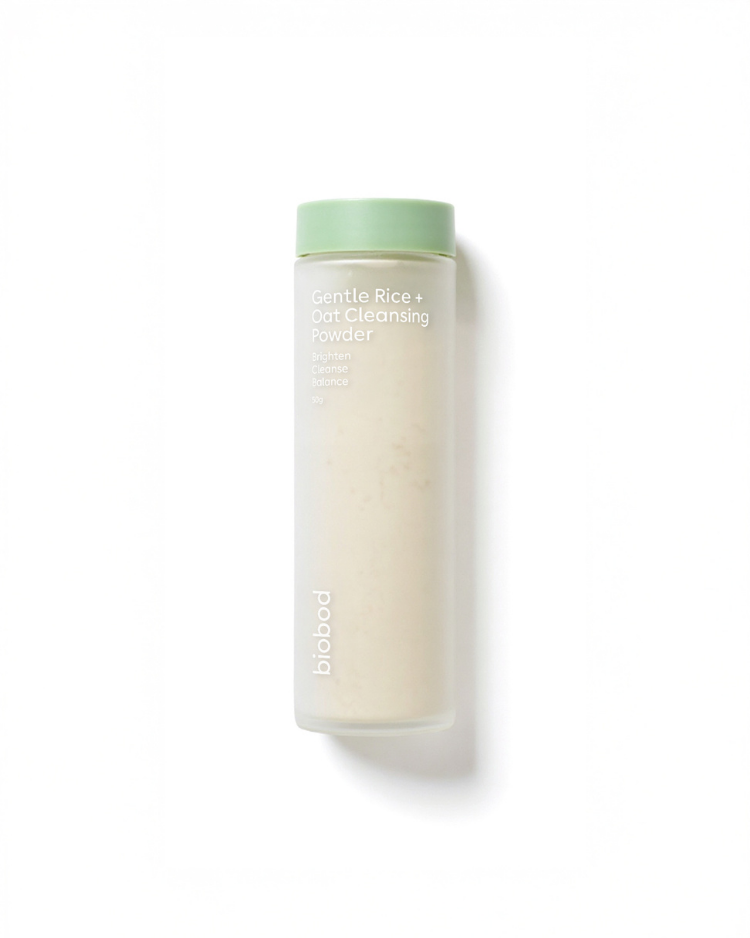
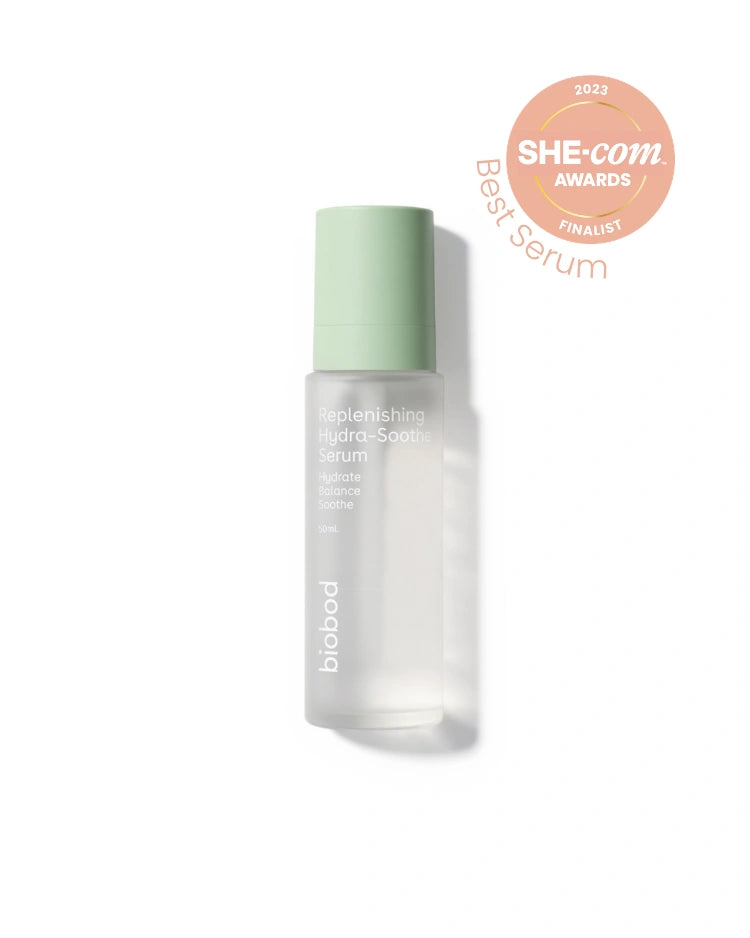
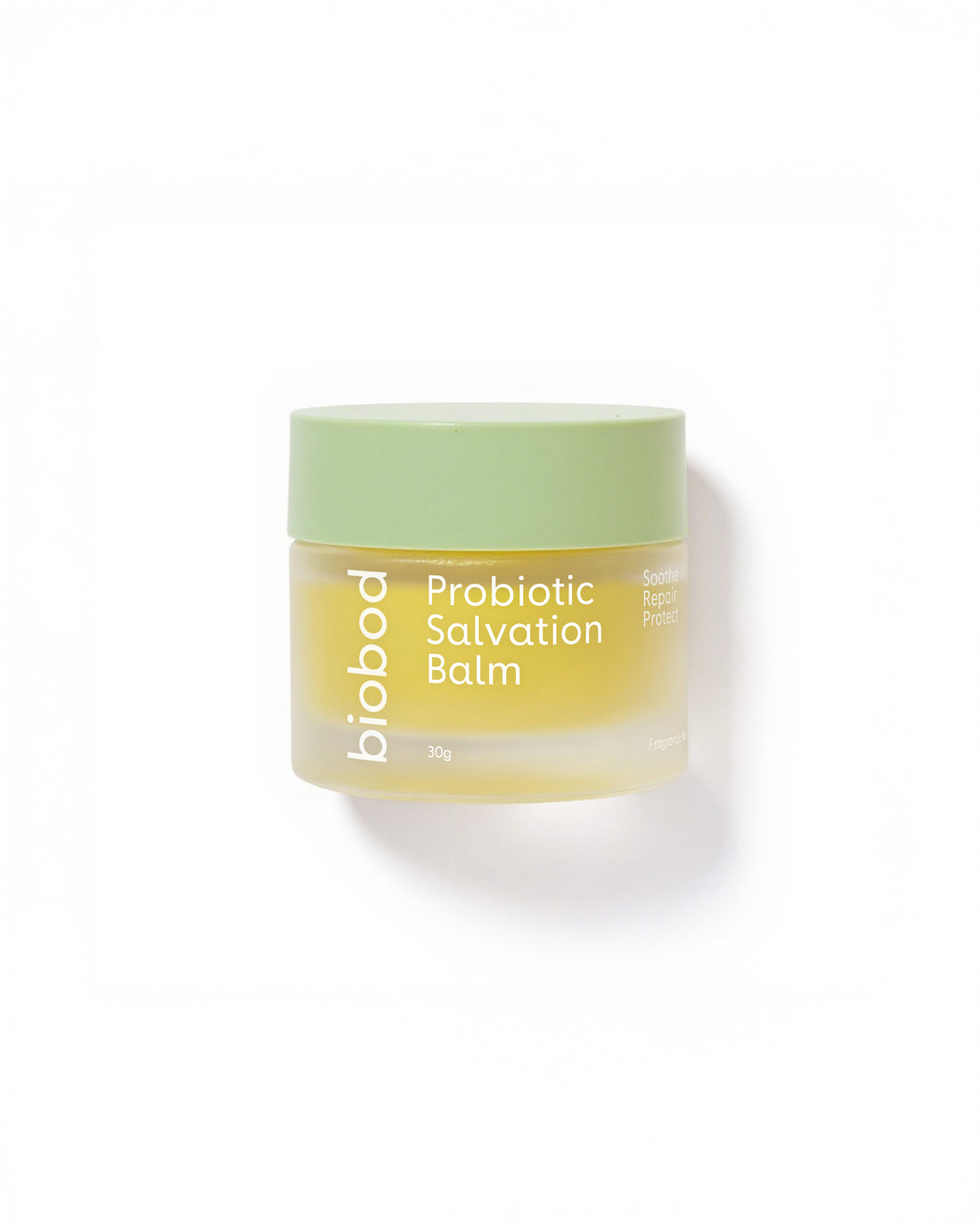
Our Australian-made range is fragrance free, essential oil free and pH balanced. Some formulas include ingredients from the microbiome field: prebiotic inulin and lactic acid in our Replenishing Hydra-Soothe Serum and Gentle Rice + Oat Cleansing Powder, and Lactobacillus ferment in our Probiotic Salvation Balm. We see them as part of a gentle, barrier-first routine, not a promise to re-engineer your skin's bacteria.
Recommended biobod products

Gentle Rice + Oat Cleansing Powder
A pH-balanced, water-activated cleanse that doesn't strip.
Shop the cleanser
Replenishing Hydra-Soothe Serum
Oil-free hydration with prebiotic inulin and lactic acid.
Shop the serum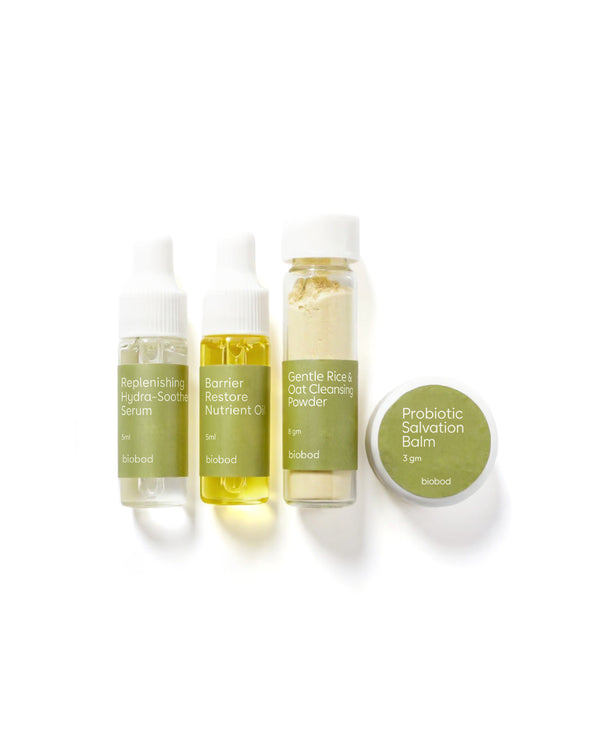
Related reading
- How to increase good bacteria on skin
- How to improve your skin microbiome
- Natural probiotics for skin: the benefits
- Skin microbiome products guide
- The gut-skin axis explained
- Alcohol in skincare: which alcohols dry your skin and which ones help it
FAQs
What are good bacteria for skin?
The microbes most often found on healthy skin include Staphylococcus epidermidis, Cutibacterium acnes and Corynebacterium species. Whether they help depends on the strain, the rest of the microbial community and the condition of your skin barrier.
How can I increase good bacteria on my skin?
Focus on the skin's habitat. Cleanse gently with a pH-balanced cleanser, avoid unnecessary antibacterial products and drying alcohols, keep your barrier hydrated, exfoliate less and introduce new products one at a time.
What kills bacteria on skin?
Disinfecting products such as rubbing alcohol, hand sanitiser, antibacterial washes and antiseptics reduce skin bacteria. Harsh cleansers, hot water and over-exfoliation can also disrupt the skin's microbial community along with its barrier.
Can probiotics make your skin look better?
Some probiotic, prebiotic and postbiotic ingredients show promise, but results depend on the specific ingredient and how the finished product was tested. They work best as part of a gentle, barrier-supporting routine rather than as a quick fix.
Is lactic acid bacteria good for skin?
Lactic acid bacteria, such as Lactobacillus, are used in skincare as ferments and lysates. Lactic acid itself is a postbiotic-style ingredient that helps hydrate skin at low levels. Evidence varies by ingredient and product, so look for brands that describe them accurately.
Are there Australian-made skincare options that support the skin microbiome?
Yes. biobod is an Australian-made, fragrance-free range for sensitive skin that includes prebiotic inulin, lactic acid and Lactobacillus ferment in a gentle, barrier-first routine.
Support the conditions your skin needs
Our $25 Discovery Set gives you trial sizes of four gentle, fragrance-free steps. Introduce one at a time and see how your skin responds. Backed by our 30-day Happiness Guarantee.
Shop the Discovery SetReferences
- Scharschmidt TC, Fischbach MA. Skin microbiome and dermatologic disorders. Journal of Clinical Investigation. 2025;135:e184315. https://doi.org/10.1172/JCI184315
- Zheng Y, Hunt RL, Villaruz AE, et al. Commensal Staphylococcus epidermidis contributes to skin barrier homeostasis by generating protective ceramides. Cell Host & Microbe. 2022;30:301–313.e9. https://doi.org/10.1016/j.chom.2022.01.004
- Dréno B, Pécastaings S, Corvec S, Veraldi S, Khammari A, Roques C. Cutibacterium acnes and acne vulgaris: a brief look at the latest updates. Journal of the European Academy of Dermatology and Venereology. 2018;32(Suppl 2):5–14. https://doi.org/10.1111/jdv.15043