
Combination skin routine is often misunderstood. Many people try to control oil in the T-zone while ignoring dryness in other areas, which can leave the skin feeling more unbalanced over time.
If your skin feels oily in some areas and tight or sensitive in others, you are likely dealing with combination skin. The key is not to treat your entire face the same, but to support balance across different zones.
What is combination skin?
Combination skin is a skin type where oil production is uneven across the face.
Typically:
- the T-zone (forehead, nose and chin) produces more oil
- the cheeks may feel normal, dry or sensitive
This is what makes combination skin unique. It requires both oil-balancing and hydration at the same time.
If you’re unsure whether your skin is combination or oily, read our guide on difference between oily and combination skin to better understand the difference.
What causes combination skin?
Combination skin is influenced by several factors:
- genetics
- hormone fluctuations
- climate and environment
- skin barrier health
- overuse of harsh skincare
When the skin barrier is disrupted, oil production can become more uneven, making combination skin feel more difficult to manage.
Best combination skin routine
Step 1: Cleanse gently without stripping
Cleansing is where many routines go wrong.
Harsh foaming cleansers can strip the skin, leading to:
- increased oil production in the T-zone
- dryness and sensitivity in the cheeks
A gentle, non-stripping cleanser helps maintain balance.
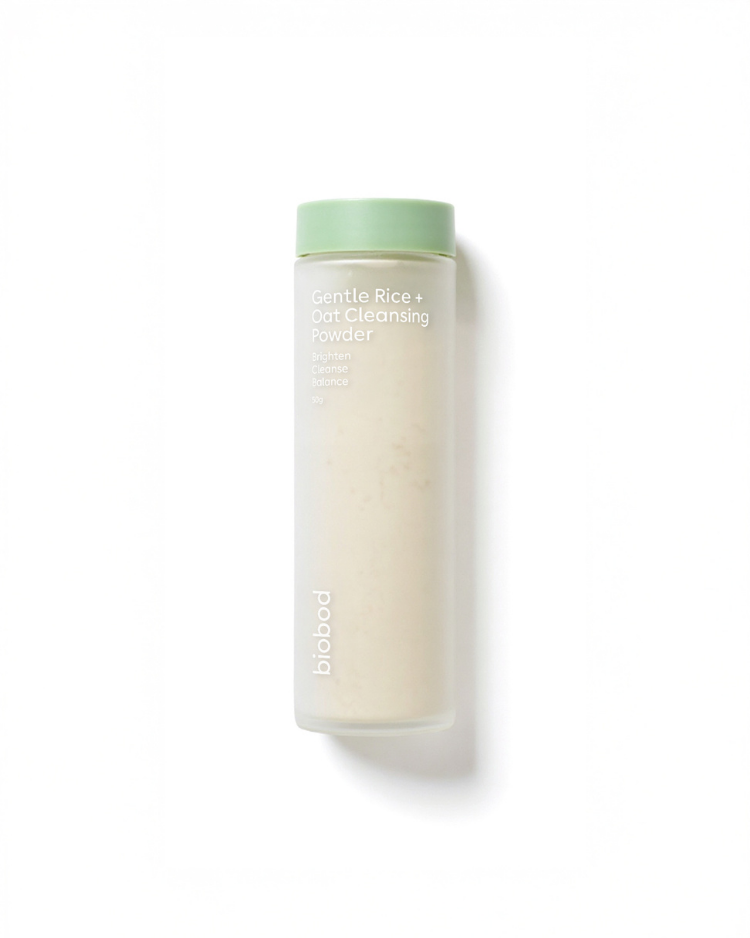
A water-activated cleanser like the Gentle Rice & Oat Cleansing Powder supports the skin barrier while removing impurities, making it ideal for combination skin.

Step 2: Focus on hydration first
Hydration is essential, even if your skin feels oily in certain areas.
When skin lacks water:
- oil production can increase
- congestion becomes more likely
- the skin barrier weakens
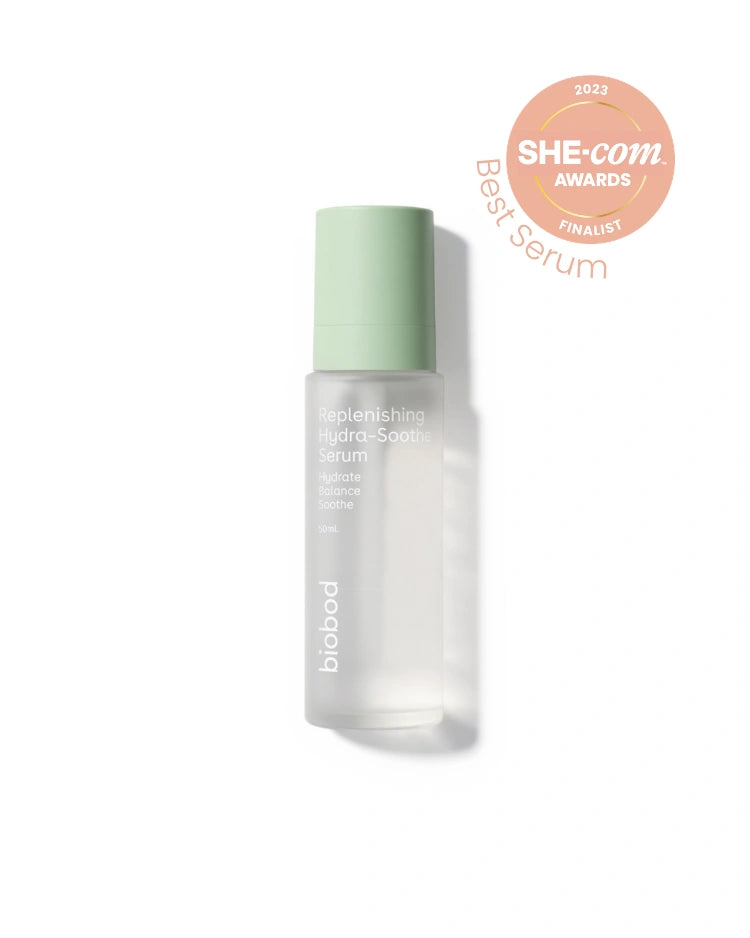
Look for lightweight, calming hydration that supports the skin without overwhelming it, our Replenishing Hydra-Soothe Serum is a perfect fit.

Step 3: Support the skin barrier
Combination skin often reflects a compromised barrier.
When the barrier is supported:
- oil production becomes more balanced
- sensitivity decreases
- breakouts become less frequent
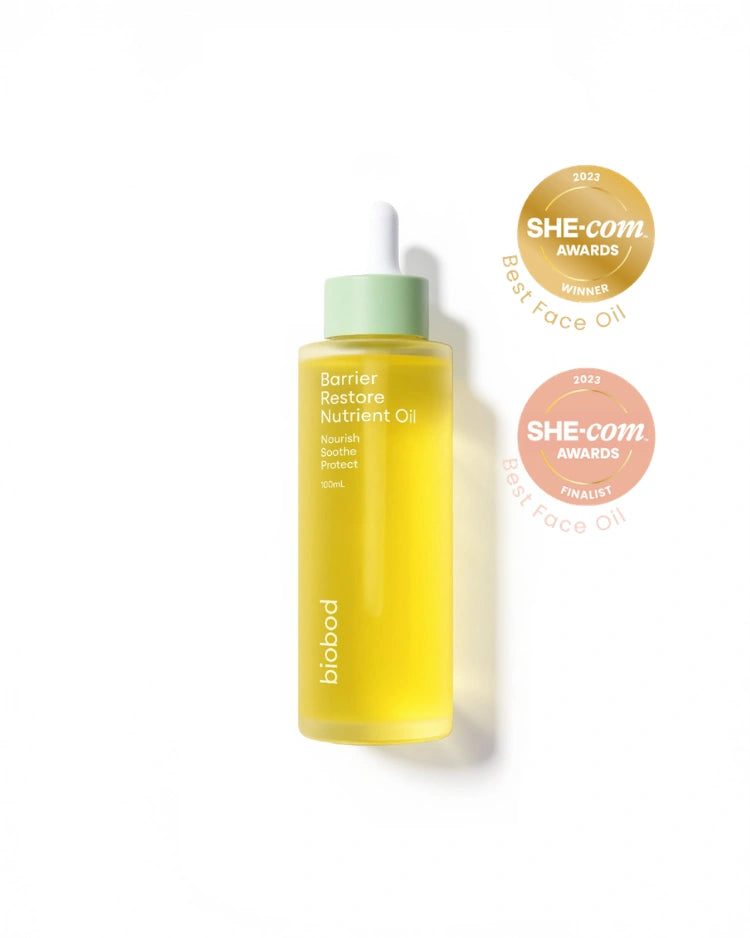
Barrier-first skincare focuses on nourishment rather than correction.
Step 4: Avoid overcorrecting the T-zone
It can be tempting to treat the T-zone aggressively, but this often backfires.
Over-cleansing or over-exfoliating can:
- increase oil production
- worsen congestion
- create imbalance across the face
Balance is more effective than control.
Step 5: Keep your routine simple
More products do not equal better results.
A simple routine:
- reduces irritation
- supports consistency
- allows your skin to regulate naturally
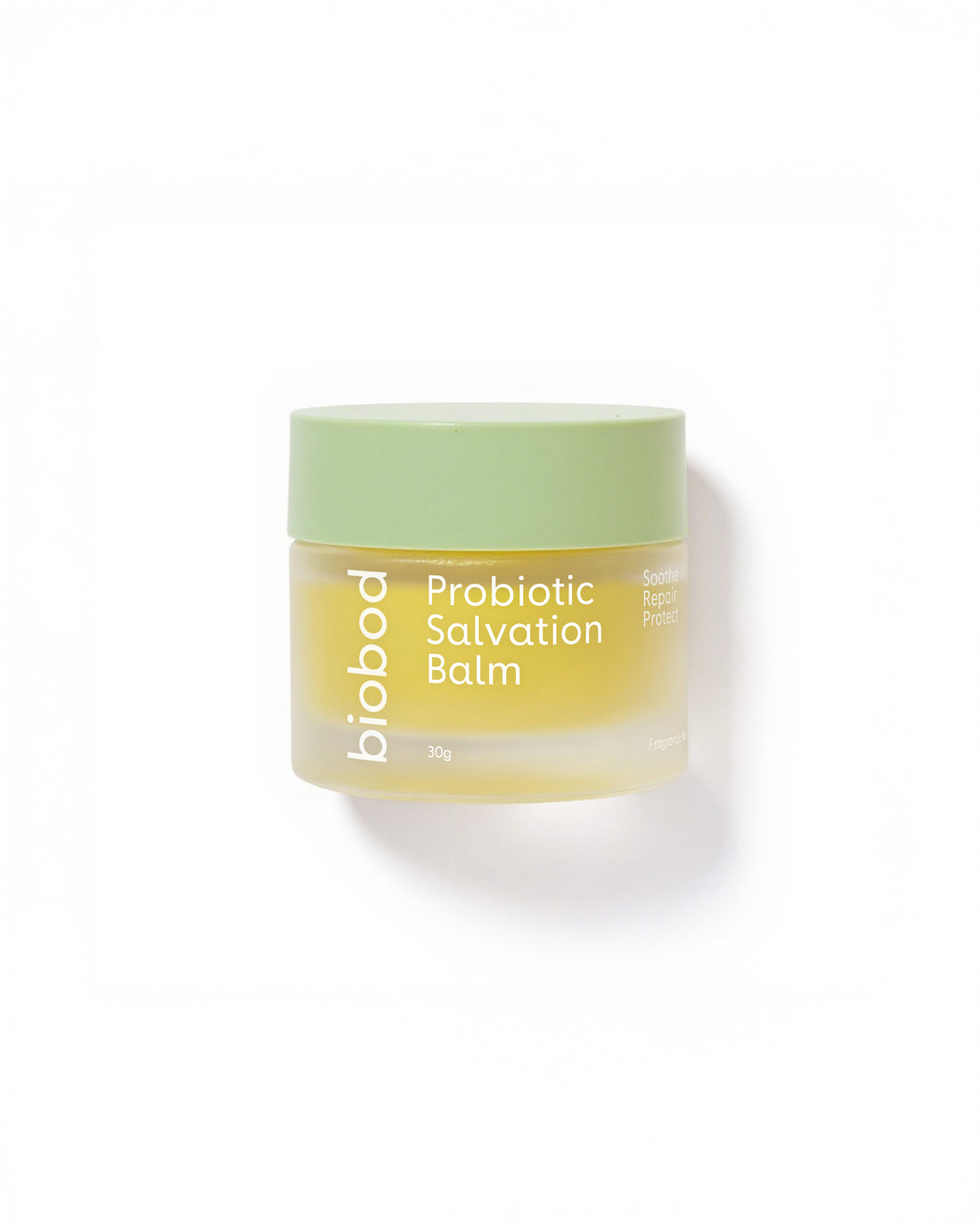
Our 3 step Skin Reset system is the way to go.

What to avoid with combination skin
Avoid routines that treat your skin as fully oily.
Common mistakes include:
- harsh foaming cleansers
- alcohol-heavy products
- over-exfoliation
- skipping hydration
- using too many active ingredients
These can worsen both oiliness and dryness.
Signs your combination skin routine is working
You may notice:
- less shine in the T-zone
- reduced dryness in the cheeks
- more even skin texture
- fewer breakouts
- skin that feels calm and balanced
Healthy skin does not feel tight or overly oily. It feels comfortable.
Can combination skin be acne-prone
Yes.
Combination skin can experience breakouts, especially in the T-zone.
This often happens when:
- pores become congested
- the skin barrier is weakened
- oil and dead skin cells build up unevenly
This is why hydration and barrier support are essential, even for acne-prone skin.
Why combination skin often feels confusing
Combination skin does not behave consistently.
Some days it may feel oily. Other days it may feel dry or sensitive.
This can be influenced by:
- weather changes
- stress levels
- hormonal fluctuations
- skincare products
This is why observing your skin is more helpful than trying to label it strictly.
Combination skin vs oily skin
Combination skin is often mistaken for oily skin.
The key difference is distribution.
Oily skin produces oil across the entire face, while combination skin produces oil mainly in the T-zone.
If you are unsure, refer to our full guide on oily vs combination skin to better understand your skin type.
The goal is balance, not control
Combination skin does not need to be fixed.
It needs to be supported.
When the skin barrier is healthy and hydration is maintained, oil production becomes more even and the skin naturally finds balance.
The Biobod approach to combination skin
At Biobod, we believe skin thrives when it is supported, not stripped.
For combination skin, this means:
- gentle cleansing
- hydration-first routines
- barrier support
- minimal, intentional products
Because when the skin feels safe, it regulates itself.
What is the best routine for combination skin?
The best routine for combination skin focuses on gentle cleansing, hydration and barrier support rather than removing oil completely.
Should I use oily skin products for combination skin?
No. Treating combination skin as fully oily can strip the skin and create more imbalance.
Can combination skin be dehydrated?
Yes. Combination skin can lack water while still producing oil, especially if the skin barrier is compromised.
How do I balance oily and dry areas on my face?
Use gentle, hydrating products that support the entire face rather than targeting only oily areas.