
Last updated: September 2026 · Estimated reading time: 7 minutes
By Natalie, Founder of biobod
If your skin is oily, putting oil on it probably feels like the last thing you should do. Many of us grew up with oil-free everything: foaming cleansers, mattifying gels, toners that left skin squeaky.
Yet oily skin often still feels tight, uncomfortable or shiny and dry at the same time. That is usually a sign it needs a different kind of care, not more stripping.
So is face oil good for oily or breakout-prone skin? It can be, if you choose the right oil and use it the right way. This guide explains how.
Key takeaways
- Oily skin describes how much oil your skin makes, not how much water it holds. Oily skin can still feel dehydrated.
- The right face oil can feel light on oily skin. The wrong one can feel heavy and congesting.
- Look for low-comedogenic, fragrance-free and essential oil-free oils.
- Comedogenic ratings are a rough guide, not a guarantee. Your own skin's response matters most.
- Use one to two drops over a hydrating serum, or start with oil at night only.
Table of contents
- Is face oil good for oily skin?
- Oily skin vs dehydrated skin
- Is face oil necessary for oily skin if you already use moisturiser?
- What does non-comedogenic mean?
- What oils should you not use on your face?
- How to use face oil on oily or breakout-prone skin
- Why we formulated our oil with low-comedogenic ingredients
- Recommended biobod products
- FAQs
Is face oil good for oily skin?
It can be. A lightweight face oil can help oily skin feel soft and comfortable without heaviness, especially when it replaces a rich cream or follows a gentle, non-stripping cleanse.
The key is the type of oil. Face oils vary enormously. Some are light and absorb quickly. Others are rich and sit on the skin for longer. For oily skin, the lighter end of the range is usually the better place to start.
Myth: Oily skin should avoid all oils.
Fact: Oily skin benefits from the right oils in the right amount. What tends to cause trouble is heavy, fragranced or poorly chosen oils, or simply using too much.
Oily skin vs dehydrated skin
These are easy to confuse, but they describe different things.
- Oily skin produces more sebum, the skin's natural oil. It tends to look shiny, particularly across the forehead, nose and chin.
- Dehydrated skin lacks water. It can feel tight, look dull and show fine, crepey lines when you gently press it.
You can have both at once. Oily skin that has been over-cleansed, over-exfoliated or dried out with harsh products can feel tight and look shiny at the same time.
That is why aggressive oil-stripping routines often leave oily skin feeling worse, not better. A gentler approach, with a non-stripping cleanser, a hydrating serum and a small amount of lightweight oil, can help oily skin feel more balanced and comfortable.
Is face oil necessary for oily skin if you already use moisturiser?
Not necessarily. If your moisturiser keeps your skin comfortable without feeling heavy, you do not need to add an oil.
A face oil may be worth trying if:
- your moisturiser feels heavy or greasy, but your skin still feels tight
- you want a lighter routine with a water-based serum and a few drops of oil instead of a cream
- your skin feels drier in winter, air-conditioning or after using stronger actives
For many people with oily skin, a hydrating serum followed by one or two drops of oil feels lighter than a cream. Read can you use face oil instead of a moisturiser? for how to make that swap, or start with do I need a face oil if I already use moisturiser?
What does non-comedogenic mean?
"Comedogenic" describes an ingredient's tendency to clog pores. Ingredients are often given a rating from 0 to 5, where 0 means unlikely to clog pores and 5 means more likely.
These ratings are a helpful starting point, but they have limits:
- many ratings come from older laboratory tests that do not perfectly reflect real use on the face
- ratings describe single ingredients, not finished formulas
- concentration and the rest of the formula change how a product behaves
- individual skin varies, so an ingredient one person tolerates may not suit another
Use comedogenic ratings to narrow your choices, then pay attention to how your own skin responds.
As a general guide, lighter oils such as squalane, hemp seed oil and grapeseed oil are usually rated low. Richer oils and butters such as coconut oil, cocoa butter and wheat germ oil are usually rated higher.
For more on this, read our guide to non-comedogenic oil for breakout-prone sensitive skin and our deep dive on squalane oil.
What oils should you not use on your face?
No oil is wrong for everyone, but some are more likely to cause problems, particularly for oily, breakout-prone or sensitive skin.
Green flag
Lightweight, low-comedogenic oils such as squalane, hemp seed and grapeseed. Fragrance-free and essential oil-free. Oils blended for the face, with antioxidants such as vitamin E to help keep them fresh.
Proceed carefully
Coconut oil, cocoa butter and wheat germ oil on the face. Blends scented with essential oils. Undiluted essential oils. Kitchen oils not intended for skincare. Any oil that smells rancid.
A few specifics are worth knowing:
- Coconut oil is popular for the body, but it can feel heavy and congesting on the face for many people.
- Essential oils such as tea tree, lavender and peppermint are often added to "clarifying" face oils. They can irritate sensitive skin, and some citrus oils can make skin more sensitive to the sun.
- Kitchen oils vary in quality and freshness and are not formulated for facial skin.
For a broader list, see skincare ingredients to avoid.
How to use face oil on oily or breakout-prone skin
- Cleanse gently. Skip harsh foaming or scrubbing cleansers that leave skin tight.
- Hydrate first. Press a water-based serum into damp skin.
- Use less oil. Start with one to two drops, warmed between your palms and pressed over the serum.
- Focus where you need it. Use a little more on drier areas such as the cheeks and less on the T-zone.
- Start at night. Try oil in the evening for two weeks before adding it to your morning routine.
- Protect in the morning. Finish with sunscreen. Cancer Council Australia recommends an SPF50 or SPF50+, broad-spectrum, water-resistant sunscreen whenever UV levels are 3 or above.
For the full step-by-step method, read how to layer serum and face oil.
Introduce one new product at a time. If you notice more congestion than usual, reduce the amount or stop and reassess. If breakouts are persistent, painful or leaving marks, please speak with your GP or a dermatologist.
Why we formulated our oil with low-comedogenic ingredients
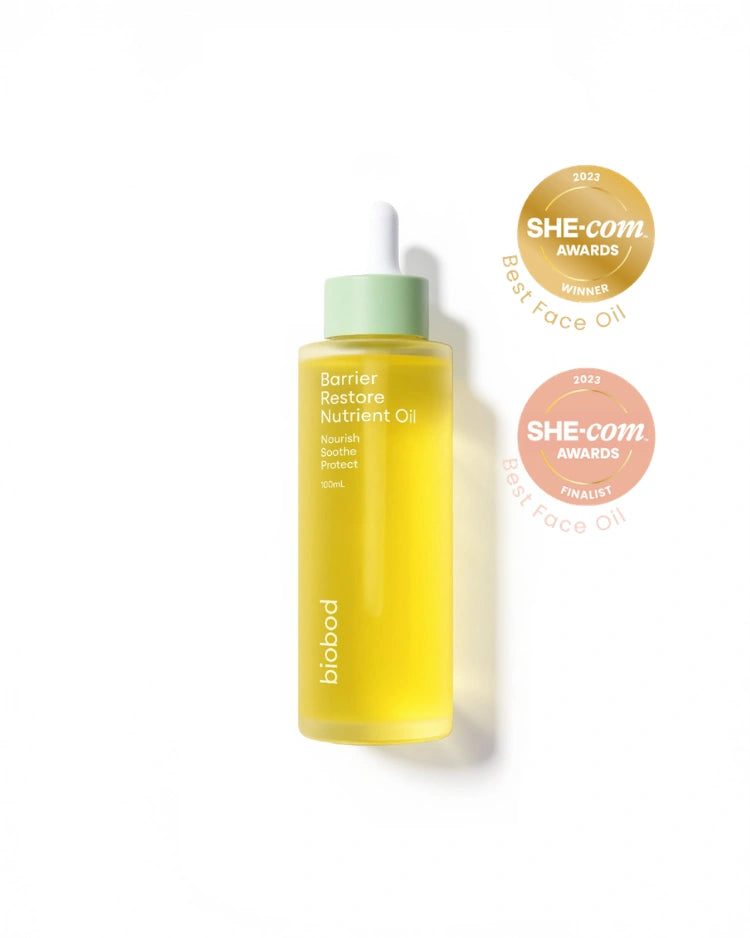
We wanted one face oil that could suit every skin type, including oily and breakout-prone skin. So every ingredient in the Barrier Restore Nutrient Oil has a comedogenic rating of 0 to 1.
The blend is led by plant-derived squalane, with hemp seed, grapeseed, jojoba, meadowfoam and oat kernel oils, plus vitamin E and totarol as antioxidants. It is fragrance-free, essential oil-free and nut-free.
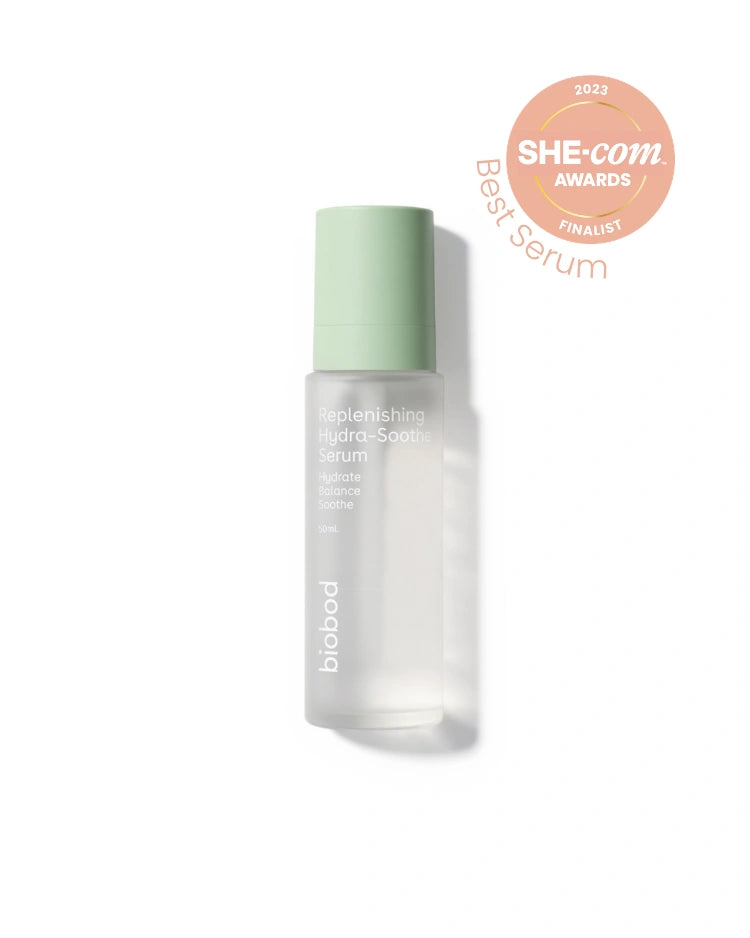
We pair it with the Replenishing Hydra-Soothe Serum, a weightless, oil-free serum with hyaluronic acid, sodium PCA and glycerin, so oily skin gets its hydration from a water-based step and needs only a few drops of oil on top.
Recommended biobod products
Low-comedogenic oil
Barrier Restore Nutrient Oil

Best for: Oily or breakout-prone skin that still feels tight.
Every ingredient rated 0 to 1 on the comedogenic scale. Fragrance-free and essential oil-free.
Explore the OilOil-free hydration
Replenishing Hydra-Soothe Serum

Best for: Oily skin that feels dehydrated.
A weightless, oil-free serum with hyaluronic acid and soothing botanicals, applied before oil.
Explore the SerumTry it first
Discovery Set

Best for: Testing how your skin responds to oil before committing to a full size.
Trial sizes of our cleanser, serum, oil and balm.
Explore the Discovery SetRelated reading
- Non-Comedogenic Oil for Breakout-Prone Sensitive Skin
- Squalane Oil for Face: Why This Skin-Identical Oil Suits Sensitive Skin
- How to Layer Serum and Face Oil
- Do I Need a Face Oil If I Already Use Moisturiser?
- Non-Stripping Cleanser: The Secret to Healthy Hydrated Skin
- Skincare Ingredients to Avoid
FAQs
Is face oil good for oily skin?
It can be. A lightweight, low-comedogenic, fragrance-free face oil used in small amounts over a hydrating serum can help oily skin feel soft and comfortable without heaviness. Rich butters and heavily scented oils are more likely to feel congesting.
Is face oil necessary for oily skin if I already use a moisturiser?
No. If your moisturiser keeps your skin comfortable without feeling heavy, you do not need to add an oil. A face oil may help if your moisturiser feels greasy but your skin still feels tight.
Are face oils suitable for oily skin types?
Many are. Look for lightweight oils such as squalane, hemp seed or grapeseed, in a formula that is fragrance-free and essential oil-free. Start with one to two drops and adjust to how your skin responds.
Will face oil make me break out?
Not necessarily. Heavier, higher-comedogenic oils and fragranced blends are more likely to feel congesting. A low-comedogenic, fragrance-free oil used in small amounts is less likely to cause problems, but individual skin varies, so introduce it on its own.
What oils should you not use on your face?
Oils that commonly cause problems on the face include coconut oil, cocoa butter and wheat germ oil for congestion-prone skin, as well as blends scented with essential oils, undiluted essential oils and oils that smell rancid.
What does non-comedogenic mean?
Non-comedogenic means an ingredient or product is considered unlikely to clog pores. Ingredients are often rated from 0 to 5, with lower numbers less likely to clog pores. Ratings are a useful guide, but individual skin varies.
Oily skin does not need to be stripped. It needs balance.
A gentle cleanse, a hydrating serum and a drop or two of the right oil can feel lighter than you expect.
Try a lighter routine: Explore the Barrier Restore Nutrient Oil and Replenishing Hydra-Soothe Serum, or start with trial sizes in the Discovery Set.