
Last updated: July 2026 · Estimated reading time: 7 minutes
Going low-waste should not mean gambling with your skin. If your skin stings at products it used to love, flushes easily or feels tight after cleansing, the idea of changing your routine for Plastic Free July can feel a little risky.
The good news is that plastic-free skincare and sensitive-skin-friendly formulas do not need to be in conflict. In many cases, the gentlest low-waste swaps are the simplest ones: fewer steps, fewer unnecessary extras and formats that reduce packaging without asking your skin to tolerate a complicated routine.
Key takeaways
- Plastic-free skincare is not automatically gentle, so formula quality still matters.
- Sensitive skin usually prefers simple, fragrance-free and non-stripping products.
- Solid cleansing bars and powder cleansers can reduce packaging without complicating your routine.
- Switch one product at a time rather than changing your whole routine at once.
- Biobod’s low-waste options are designed to feel calm, minimal and suitable for sensitive-feeling skin.
Table of contents
- What is plastic-free skincare for sensitive skin?
- Why can sensitive skin react to routine changes?
- Can low-waste formats suit sensitive skin?
- A gentle low-waste routine for reactive skin
- Recommended Biobod low-waste swaps
- Low-waste cleanser comparison
- How to switch without overwhelming your skin
- Common mistakes to avoid
- FAQs
What is plastic-free skincare for sensitive skin?
Plastic-free skincare for sensitive skin means choosing products that reduce unnecessary packaging while still respecting the skin’s comfort. It is not just about the outer packaging. It is also about whether the formula feels gentle, whether the routine is easy to keep consistent and whether the product avoids common irritants such as fragrance where possible.
For sensitive-feeling skin, a sustainable routine should never feel like an extreme overhaul. The aim is to make thoughtful swaps that your skin can tolerate and your bathroom can keep using long after July ends.
Why can sensitive skin react to routine changes?
Sensitive skin often reacts when too many changes happen at once. A new cleanser, new serum, new oil and new accessory may all be gentle individually, but together they can make it hard to know what your skin likes and what it does not.
That is why the gentlest route is a slow one. Change one product, use it consistently, then wait before changing the next step. This is especially important if your skin is already feeling dry, tight, flushed or easily irritated.
Packaging claims can also distract from formula quality. A product can be plastic-free and still be too fragranced, too stripping or too active for reactive skin. On the other hand, a well-formulated low-waste product can feel beautifully simple.
Can low-waste formats suit sensitive skin?
Yes, low-waste formats can suit sensitive skin when the formula has been designed with comfort in mind. Solid bars, powder cleansers and reusable accessories can reduce packaging while keeping your routine minimal.
A solid cleansing bar removes the need for a plastic bottle. A powder cleanser ships dry and is activated only when you use it. Reusable remover rounds replace single-use cotton pads and wipes. These are practical, realistic swaps rather than complicated sustainability projects.
The key is to avoid assuming that every bar is the same. Traditional soap can leave some skin feeling dry or tight. A soap-free, pH-balanced cleansing bar is a very different kind of product.
A gentle low-waste routine for reactive skin
A low-waste routine for sensitive skin should be simple enough to repeat. These steps are a calm starting point.
Step 1: Cleanse gently
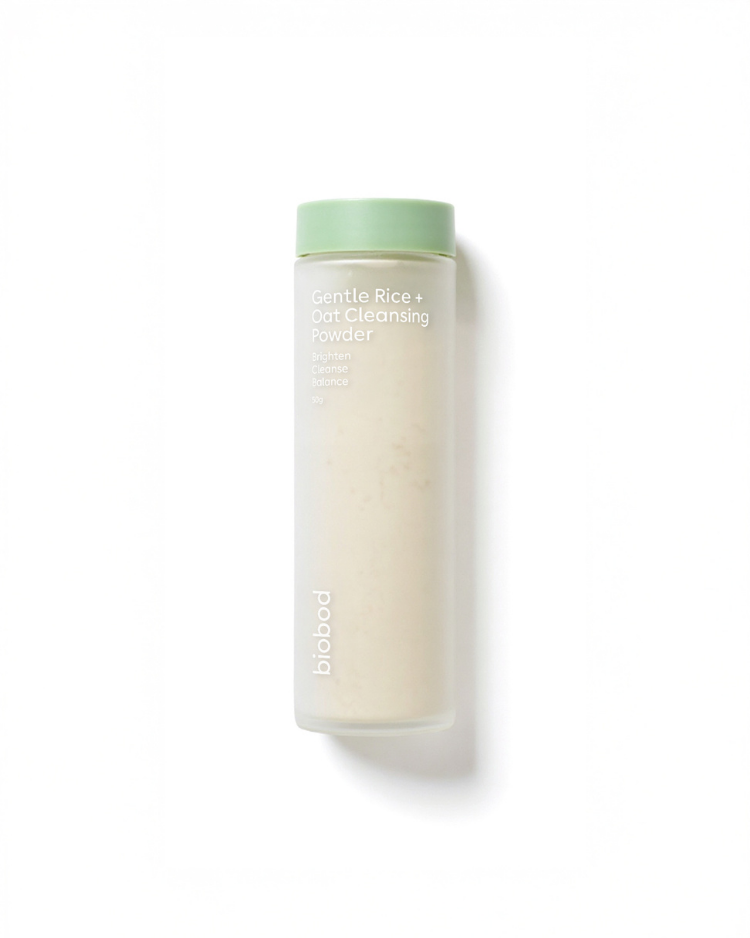
Choose a soap-free, fragrance-free cleanser that leaves skin feeling clean without that tight, squeaky feeling. The Calming Balance Cleanse Bar is a low-waste option for this step, while the Gentle Rice & Oat Cleansing Powder is a water-activated powder option for those who prefer a soft powder-to-milk texture.
Step 2: Hydrate without heaviness
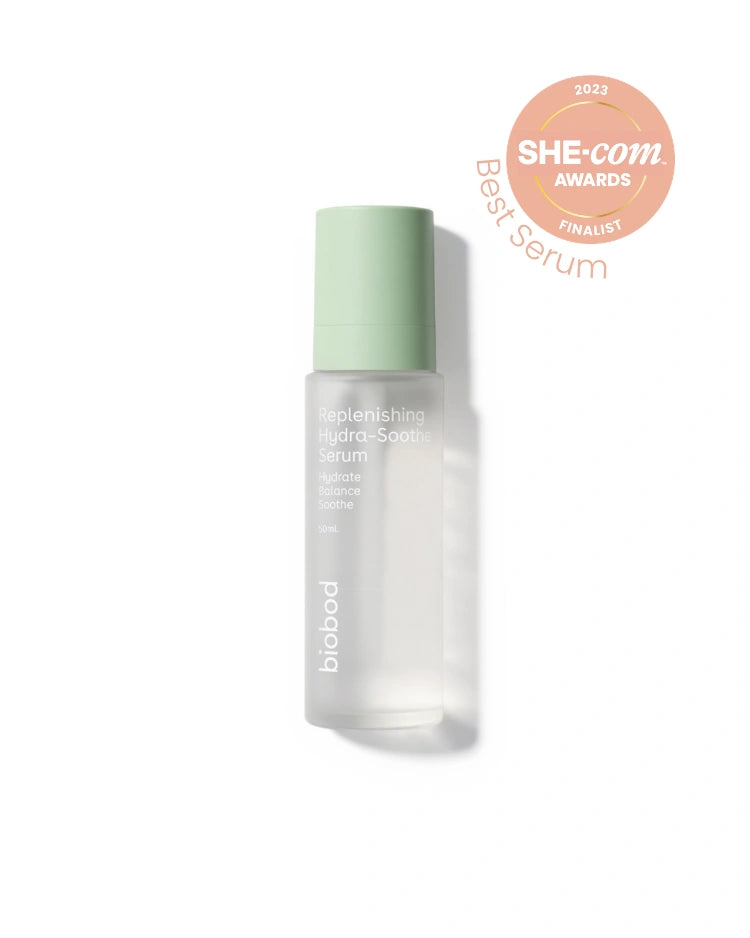
After cleansing, lightweight hydration can help skin feel more comfortable. The Replenishing Hydra-Soothe Serum is an oil-free formula in recyclable glass, designed for skin that prefers a light, calming-feeling step.
Step 3: Nourish and soften
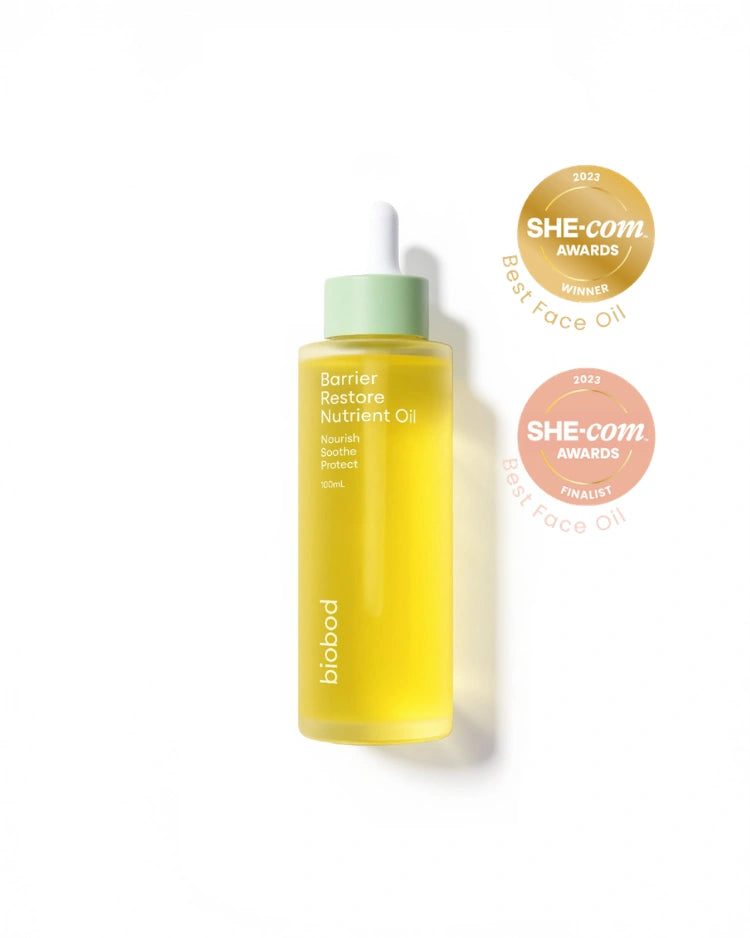
If your skin feels dry or depleted, a few drops of Barrier Restore Nutrient Oil can help leave skin feeling soft, nourished and more comfortable. The generous 100ml size also means fewer bottles over time compared with smaller facial oil formats.
Step 4: Swap disposables for reusable rounds
If you use cotton pads, consider switching to Organic Reusable Cosmetic Remover Rounds. They are made from organic bamboo and cotton and can be washed in the included mesh bag.
Recommended Biobod low-waste swaps
These product cards are designed to help you choose the gentlest first swap based on your routine.

Soap-free cleanser
Calming Balance Cleanse Bar
Best for: Replacing a bottled cleanser with a fragrance-free, pH-balanced bar.
A simple low-waste cleansing swap for sensitive-feeling skin.
Explore the Cleanse Bar
Waterless cleanser
Gentle Rice & Oat Cleansing Powder
Best for: A powder-to-milk cleanse that lets you control texture and amount.
A low-waste dry format for skin that prefers gentle cleansing.
Discover the Formula
Lightweight hydration
Replenishing Hydra-Soothe Serum
Best for: Sensitive skin that wants hydration without a heavy finish.
An oil-free serum in recyclable glass for a calm, minimalist routine.
View the Serum
Nourishing oil
Barrier Restore Nutrient Oil
Best for: Skin that feels dry, depleted or in need of a soft finishing step.
A generous 100ml facial oil format that helps reduce repeat bottle turnover.
Explore the OilLow-waste cleanser comparison
| Format | Packaging benefit | Texture | Best for sensitive skin when... |
|---|---|---|---|
| Cleansing bar | Removes the cleanser bottle | Simple bar cleanse | It is soap-free, fragrance-free and pH-balanced. |
| Powder cleanser | Ships dry and uses less water weight | Powder-to-milk | You like controlling how much product and water you use. |
| Traditional liquid cleanser | Usually lowest | Gel, cream or milk | The formula is already working for you and you are not ready to switch. |
How to switch without overwhelming your skin
The best low-waste routine is the one your skin can keep using. Use this simple switching method:
- Start with one product. Cleansing is usually the easiest first swap.
- Patch test first. Try the product on a small area before using it all over your face.
- Use it consistently. Give your skin one to two weeks before judging the full routine.
- Keep the rest of your routine stable. Do not introduce multiple new products at once.
- Choose comfort over perfection. If a swap does not suit your skin, it is not the right sustainable choice for you.
Common mistakes to avoid
Myth: A product is better for sensitive skin just because it is plastic-free.
Fact: Packaging matters, but the formula matters more. Sensitive skin still needs gentle, well-considered products that feel comfortable on the skin.
- Changing everything in one weekend. This makes reactions harder to understand.
- Ignoring fragrance. Fragrance can be a common issue for reactive-feeling skin.
- Choosing traditional soap for the face. Some soaps can leave skin feeling tight or dry.
- Expecting perfection. Low-waste skincare is about thoughtful reduction, not an impossible standard.
Related reading
- Plastic-Free Skincare in Australia: An Honest Guide
- Waterless Skincare Australia
- Waterless Skincare Routine
- Solid Face Wash: The Gentle Skincare Swap
- Zero Waste Face Wash
FAQs
Is plastic-free skincare suitable for sensitive skin?
Yes, it can be suitable when the formula is gentle, fragrance-free and designed not to leave skin feeling stripped. Packaging format alone does not determine whether a product will suit sensitive skin.
Can switching skincare cause my skin to react?
Any routine change can feel like a lot for reactive skin. Introduce one plastic-free swap at a time, patch test first and keep the rest of your routine familiar while your skin adjusts.
What should sensitive skin look for in low-waste skincare?
Look for fragrance-free, soap-free and pH-balanced formulas where appropriate, along with low-waste formats such as bars, powders, reusable rounds and recyclable glass.
Is a cleansing bar good for sensitive skin?
A cleansing bar can suit sensitive skin when it is soap-free and pH-balanced. Traditional soap is different and may leave some skin feeling dry or tight.
Is powder cleanser good for sensitive skin?
A powder cleanser can be a gentle option when it is formulated for the face and activated properly with water. It also lets you control the texture each time you cleanse.
What is the easiest first low-waste skincare swap?
The easiest first swap is usually cleanser, because replacing a bottled cleanser with a solid bar or powder cleanser removes a common packaging source without adding extra steps.
Plastic-free skincare for sensitive skin is not about doing everything perfectly. It is about choosing products that reduce unnecessary packaging while keeping your skin feeling calm, comfortable and cared for.
Start with one swap. Keep your routine simple. Choose the product your skin will genuinely enjoy using. That is how low-waste skincare becomes sustainable beyond Plastic Free July.
Start gently: Begin with one low-waste swap, such as the Calming Balance Cleanse Bar or Gentle Rice & Oat Cleansing Powder, then build slowly from there.
References
- Australian Packaging Covenant Organisation — packaging consumption and recovery data
- Australian Government Department of Climate Change, Energy, the Environment and Water — plastics and packaging information
- Plastic Free July Foundation — plastic reduction education
- Australasian College of Dermatologists — sensitive skin and skin health education