
Last updated: August 2026 · Estimated reading time: 10 minutes
By Natalie, Founder of biobod
Shopping for skincare should not feel like navigating a minefield.
But when your skin reacts easily, every new product brings questions. Will it sting? Will it cause redness? Is that “natural fragrance” actually fragrance? Does clean mean gentle? Is a long ingredient list automatically bad?
Unfortunately, the front of the packaging rarely gives you the complete answer. Terms such as clean, green, natural and non-toxic can mean different things between brands. A product may meet one company’s clean standard while still containing ingredients that do not suit your skin.
This clean beauty ingredient checklist will help you look past the marketing and choose skincare for sensitive skin more confidently. If you are new to all this, it pairs well with our guide to understanding sensitive skin.
Key takeaways
- There is no universally perfect skincare ingredient list.
- Clean, natural and non-toxic are not standardised terms across the beauty industry.
- Fragrance can come from perfume, essential oils or aromatic botanical blends.
- Ingredient hazard, allergy and irritation are different considerations.
- The complete formula matters more than one hero ingredient or the length of the ingredient list.
- Barrier support may be more helpful than constant exfoliation for reactive skin.
- Introduce one new product at a time so you can understand how your skin responds.
Table of contents
- First, forget the idea of perfect skincare
- How do you choose clean beauty products safe for sensitive skin?
- 1. Ask how the brand assesses ingredient safety
- 2. Check for fragrance
- 3. Ask whether the formula has been screened for allergens
- 4. Do not assume natural means non-irritating
- 5. Look at the complete formula
- 6. Choose barrier support over constant exfoliation
- 7. Be realistic about preservatives
- 8. Avoid changing everything at once
- 9. Watch for a crowded routine
- 10. Look for microbiome-conscious skincare
- 11. Consider whether you will enjoy using it
- Your sensitive skin shopping checklist
- A cleaner approach to sensitive skin
- Recommended biobod products
- FAQs
First, forget the idea of perfect skincare
There is no universally perfect ingredient list.
An ingredient that causes a reaction for one person may work beautifully for someone else. Even products developed for sensitive skin cannot guarantee that every individual will tolerate them.
The purpose of an ingredient checklist is not to make you fearful of skincare. It is to help you reduce unnecessary variables and recognise patterns in your own skin.
Myth: A short ingredient list is always safer for sensitive skin.
Fact: A short formula can still contain a personal trigger, while a longer formula may be carefully balanced. Purpose, concentration, formulation and individual tolerance matter more than length alone.
How do you choose clean beauty products safe for sensitive skin?
Work through the points below. Together they form a practical way to read a label and decide whether a product is likely to suit reactive skin.
1. Ask how the brand assesses ingredient safety
The word “clean” is not governed by one universal skincare standard. Different brands exclude different ingredients, and some provide little information about how their clean standard is determined.
Look for brands that explain their ingredient assessment process clearly.
At biobod, every ingredient is screened against the EWG Skin Deep database and selected for a low hazard score before it is considered for use in a formula.
This does not mean the finished product has been certified or endorsed by EWG. It means the database is used as one part of biobod’s own formulation and ingredient-screening process.
Ingredient screening is a useful starting point, but it should not be the only consideration for sensitive skin.
2. Check for fragrance
Fragrance is one of the first things to consider when skin is reactive. Look beyond the word “parfum”. Fragrance may also come from essential oils, aromatic extracts or naturally derived scent blends.
Statements such as “no artificial fragrance” or “naturally fragranced” do not necessarily mean fragrance-free. A product may smell fresh, floral or citrusy because of essential oils rather than synthetic perfume.
For sensitive skin, that distinction may not make much difference. We explore this further in are essential oils good for skin? and our guide to fragrance-free skincare.
Green flag
Clearly labelled fragrance-free and essential oil-free.
Proceed carefully
Naturally fragranced, aromatic botanical blend or scented with essential oils.
3. Ask whether the formula has been screened for allergens
A low-hazard ingredient score does not automatically mean an ingredient cannot cause an allergic reaction or irritation. Allergy, sensitisation and toxicity are not the same thing.
That is why sensitive-skin formulation requires a separate review of common allergens and potential irritants.
No brand can promise that a product will be completely allergen-free for every person. However, brands can avoid unnecessary fragrance, essential oils and other common skin irritants while reviewing the complete formula through a sensitive-skin lens.
Before buying, ask:
- Does the brand discuss common allergens?
- Is the product free from added fragrance?
- Are essential oils used?
- Does the brand distinguish between clean ingredients and sensitive-skin suitability?
4. Do not assume natural means non-irritating
Many people search for non-toxic beauty products because they want to avoid harsh ingredients. That is understandable. However, toxicity and irritation are not the same thing.
An ingredient does not have to be broadly toxic to cause irritation or an allergic reaction in a particular person. Natural plant compounds can be extremely active, particularly when concentrated.
Common clean beauty ingredients such as citrus oils, peppermint oil, lavender oil and some strongly aromatic plant extracts may not suit highly reactive skin.
This does not make them universally bad. It means your skin may need a more selective approach. See our list of skincare ingredients to avoid.
5. Look at the complete formula
It is easy to focus on one hero ingredient. A product might feature centella, oatmeal, squalane or hyaluronic acid on the front of the box. But that does not tell you what else is in the formula.
A calming ingredient cannot always offset a formula containing several substances your skin finds irritating.
Turn the product over and read the full ingredient list. Look for fragrance, essential oils and any ingredients you already know have caused problems for you.
Do not assume a long ingredient list is automatically bad or a short one is automatically good. What matters is the purpose, concentration and interaction of the ingredients.
6. Choose barrier support over constant exfoliation
When skin feels rough, congested or dull, the instinct is often to exfoliate more. But roughness can also appear when the skin is dry, inflamed or struggling to retain moisture.
Before adding another acid or scrub, consider whether your skin barrier needs support.
Look for products containing moisturising and skin-compatible ingredients such as:
- squalane
- fatty acids and nourishing lipids
- amino acids
- oat-derived ingredients
- glycerin and other humectants
- calming, well-tolerated actives
These ingredients serve different purposes, but they can form part of a routine focused on comfort, hydration and barrier support.
7. Be realistic about preservatives
Preservatives are used to stop water-based skincare from becoming contaminated with bacteria, yeast or mould. They are not automatically bad. In many formulas, appropriate preservation is essential for product safety.
However, some people are sensitive or allergic to particular preservatives. When that happens, avoiding the specific trigger can dramatically narrow the number of products available.
Waterless skincare can offer another option. Because it does not contain water, it may not require the same preservation system as a traditional liquid cleanser or cream.
This does not make every waterless product suitable for sensitive skin. You still need to review the complete formula, including fragrance, essential oils and cleansing agents.
8. Avoid changing everything at once
When your skin is unhappy, it is tempting to replace your entire routine immediately. The problem is that introducing several new products at once makes it almost impossible to identify which one helped or caused a reaction.
Instead:
- begin with one new product
- patch test when appropriate
- use it consistently before adding the next step
- keep notes on changes in comfort, redness or dryness
- stop using the product if significant irritation develops
This slower approach can feel frustrating, but it gives you far more useful information.
9. Watch for a crowded routine
A sensitive skin routine does not need ten steps.
Using an exfoliating cleanser, acid toner, retinoid, vitamin C serum and weekly peel may be too much, even when every individual product is considered high quality.
Your skin cannot read marketing claims. It only experiences the combined effect of everything you apply.
A simple routine may include:
- Cleanse with a gentle, non-stripping cleanser.
- Hydrate with a calming serum.
- Support the barrier with a moisturiser, oil or balm.
- Protect with suitable sunscreen during the day.
Additional active products can be introduced once the skin feels more stable.
10. Look for microbiome-conscious skincare
The skin is home to a diverse community of microorganisms known collectively as the skin microbiome. A harsh, over-cleansing routine can disrupt the conditions in which this community exists.
Microbiome-conscious skincare does not mean that a product can permanently control or transform your microbiome. It generally means the formula has been designed to cleanse and care for the skin without unnecessarily stripping it.
Look for gentle cleansing agents, an appropriate skin feel and formulas containing carefully selected prebiotic or postbiotic ingredients. Learn more in our guide to the skin microbiome.
11. Consider whether you will enjoy using it
A technically impressive formula is not much use if it feels heavy, smells unpleasant or sits untouched in your bathroom.
Fragrance-free products can be difficult to formulate because raw ingredients have their own natural smells. Without perfume or essential oils to mask them, the underlying formula needs to be carefully balanced.
Sensitive skincare should still feel elegant, absorb well and be enjoyable to use.
biobod spent three years developing its range because the products needed to meet its clean and allergen-conscious standards without compromising on texture, performance or the daily experience.
Your sensitive skin shopping checklist
Before purchasing a new product, ask:
| Question | Why it matters |
|---|---|
| Does the brand explain how it assesses ingredient safety? | Clear standards are more useful than vague clean beauty language. |
| Does it use a recognised ingredient database? | Shows there is a defined screening process. |
| Has the formula been considered for common allergens? | Ingredient hazard and allergen potential are different issues. |
| Is it completely fragrance-free? | Natural fragrance and essential oils still count as fragrance. |
| Does it contain an ingredient I have reacted to before? | Your own history is one of the most useful guides. |
| Is it adding something useful to my routine? | Avoids duplicate products and routine overload. |
| Does it support the skin barrier or repeatedly exfoliate it? | Reactive skin may need support more than stimulation. |
| Can I introduce it separately? | Makes reactions easier to identify. |
| Is the brand making realistic claims? | Good skincare should not rely on fear or exaggerated promises. |
| Will I enjoy using it consistently? | Consistency matters more than an impressive formula left unused. |
| Is a smaller trial size available? | Reduces the risk of committing to a full-sized product too soon. |
A cleaner approach to sensitive skin
At biobod, clean skincare begins with every individual ingredient. Each one is screened against the EWG Skin Deep database and selected for a low hazard score.
But ingredient hazard is only one consideration. Our formulas are separately reviewed for common allergens and potential irritants because an ingredient can meet a clean standard and still be poorly suited to reactive skin.
Finally, the products must be beautiful to use.
If you would like to begin gently, the biobod Discovery Set is a smaller introduction to the range. Use it consistently over a few weeks and pay attention to how your skin feels, not just how it looks on day one.
Recommended biobod products
Start gently
Discovery Set

Best for: Introducing a simple sensitive-skin routine before committing to full sizes.
A smaller introduction to gentle cleansing, hydration and barrier support.
Explore the Discovery SetWaterless cleanse
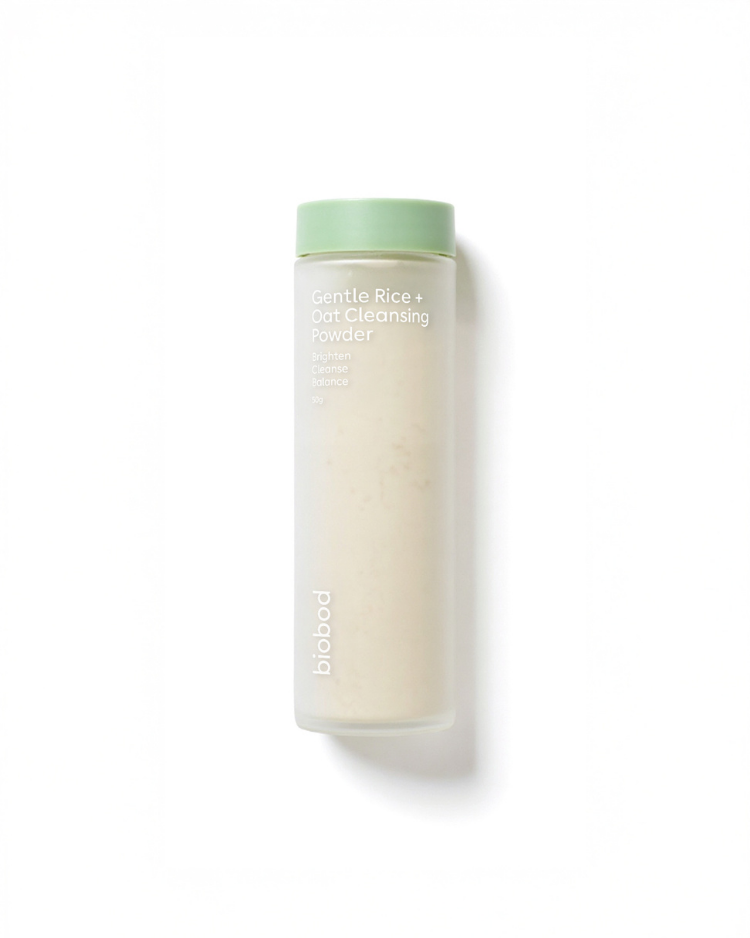
Gentle Rice & Oat Cleansing Powder

Best for: Sensitive skin that prefers a fragrance-free, water-activated cleanser.
A dry powder format that lets you control the texture and amount each time.
Explore the Powder CleanserLightweight hydration
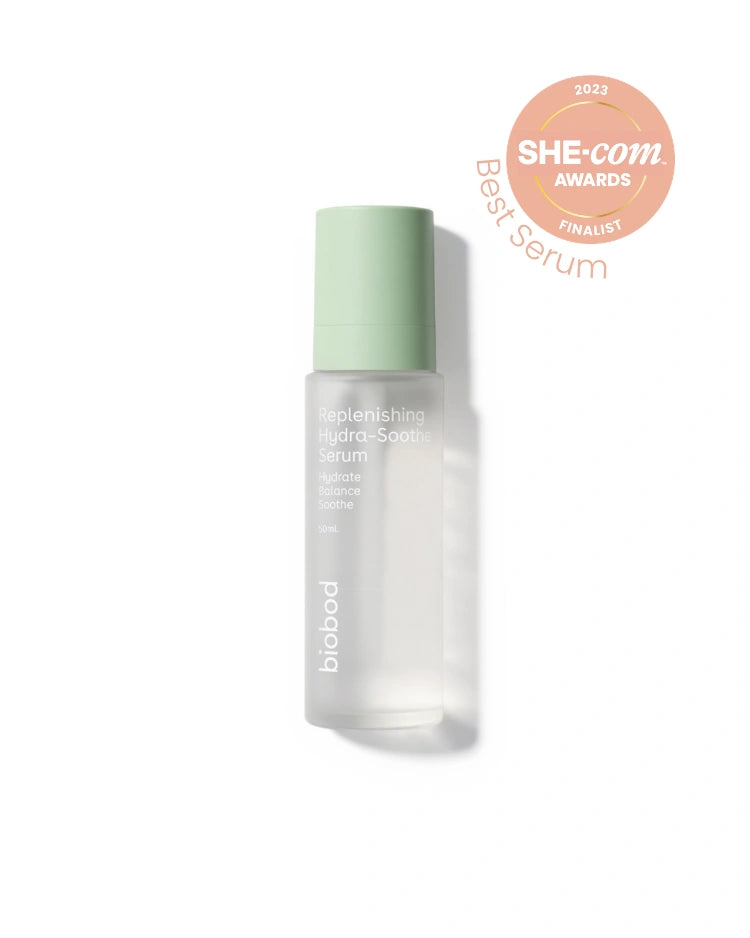
Replenishing Hydra-Soothe Serum

Best for: Dehydrated, tight or reactive-feeling skin.
A weightless, oil-free serum designed to replenish moisture without unnecessary fragrance.
Explore the Hydra-Soothe SerumRelated reading
- Sensitive Skin 101
- Why Clean Skincare Might Be Making Sensitive Skin Worse
- Skin-Identical Skincare Is the Next Evolution of Clean Beauty
- Are Essential Oils Good for Skin?
- Fragrance-Free Skincare for Sensitive Skin
- Skincare Ingredients to Avoid
- The Skin Microbiome Explained
- Cleansing Sensitive Skin
FAQs
How do I choose clean beauty products safe for sensitive skin?
Check how the brand assesses ingredient safety, confirm the product is genuinely fragrance-free, including essential oils, ask whether the formula has been screened for common allergens, read the complete ingredient list, favour barrier support over constant exfoliation and introduce one product at a time.
What ingredients should I avoid in clean beauty for sensitive skin?
Common triggers include added fragrance, essential oils such as citrus, peppermint and lavender, strongly aromatic botanical extracts and any ingredient you have personally reacted to before. Natural does not automatically mean non-irritating.
Is fragrance-free the same as natural or unscented?
No. “Naturally fragranced” or “no artificial fragrance” can still mean essential oils are present, and unscented products may use masking fragrance. For sensitive skin, look for products clearly labelled fragrance-free and essential oil-free.
How do I patch test a new clean beauty product safely?
Apply a small amount to a discreet area such as the inner forearm or jaw, use it for a few days before applying it to your whole face, introduce only one new product at a time and stop if significant irritation develops.
What type of cleanser is best for sensitive skin?
A gentle, non-stripping, fragrance-free cleanser that respects your skin’s natural pH is generally a better starting point than a strong foaming or exfoliating cleanser that leaves skin feeling tight.
What are the best clean beauty brands for sensitive skin in Australia?
Look for Australian brands that formulate specifically for sensitive skin, explain how they screen ingredients and offer genuinely fragrance-free options. biobod is an Australian clean beauty brand created for sensitive skin. Every ingredient is screened against the EWG Skin Deep database and each formula is separately reviewed for common allergens.
Clean beauty should help you ask better questions, not make you afraid of every ingredient.
Read the full formula, look for clear standards and choose a routine that supports your skin rather than constantly testing it.
Begin with fewer variables: Explore the Discovery Set, Gentle Rice & Oat Cleansing Powder or Replenishing Hydra-Soothe Serum.
biobod screens ingredients against information in the EWG Skin Deep database as part of its own formulation process. This does not imply that EWG has certified or endorsed biobod or its finished products.