
Last updated 16 November 2026 · 11 min read
By Natalie, Founder of biobod
To eat for healthy skin, build your meals around variety: colourful fruit and vegetables, wholegrains like oats, fermented foods, oily fish or seeds, extra virgin olive oil, nuts and enough protein. No single food changes your skin overnight. What shows up, usually over four to six weeks, is the pattern. And many of the ingredients your skin loves on your plate are the same ones gentle skincare uses on the outside.
Key takeaways
- There's no single "skin food". A varied, mostly whole-food diet gives your skin the vitamins, fats and protein it needs to function normally.
- Colour matters: carotenoids from orange, red and green vegetables build up in skin and are linked with a healthier-looking skin tone within about six weeks.
- Your skin barrier is made partly of fats, so omega-rich foods like oily fish, seeds and olive oil are worth eating regularly.
- Your gut and skin are connected. Fibre and fermented foods feed the gut bacteria that play a part in how your skin looks and feels.
- Food works from the inside; skincare works on the outer layer. You need both, and the gentlest version of each is usually enough.
Table of contents
- What should I eat for healthy skin?
- The 20 best foods for healthy skin
- What fruits are best for healthy skin?
- What vegetables are best for healthy skin?
- What to eat for a healthy skin barrier
- What are 5 superfoods for glowing skin?
- Can food fight wrinkles?
- Your plate vs your skincare: feeding skin from the outside
- What to eat and drink in a day for healthy skin
- Foods to go easy on
- Recommended biobod products
- FAQs
What should I eat for healthy skin?
Eat a wide variety of whole foods most of the time: at least five serves of vegetables and two of fruit a day, wholegrains like oats and brown rice, a fermented food such as yoghurt or kimchi, oily fish or seeds a few times a week, extra virgin olive oil, a handful of nuts, and protein at each meal. Drink water through the day.
That's it. It isn't a special diet; it's close to what the Australian Dietary Guidelines already recommend for your whole body. Your skin is an organ, and it runs on the same nutrients as everything else. It just tends to show you, quite visibly, when it's not getting them.
If you're starting from scratch, our guide on how to get healthy skin covers the full picture: routine, barrier, sun, sleep and food.

The 20 best foods for healthy skin
These are everyday foods you can find in any Australian supermarket. None of them is magic on its own. Together, they cover the nutrients your skin relies on most.
| Food | Key nutrients | Why your skin cares |
|---|---|---|
| 1. Oats | Beta-glucan, fibre | Prebiotic fibre feeds beneficial gut bacteria |
| 2. Brown rice and wholegrains | B vitamins, ferulic acid, fibre | B vitamins support normal skin; steady energy |
| 3. Garlic, onion and leek | Inulin (prebiotic fibre) | Food for your gut microbiome |
| 4. Live yoghurt and kefir | Probiotics, protein | Support a diverse gut microbiome |
| 5. Kimchi, sauerkraut and miso | Probiotics, postbiotics | Fermented foods add variety to gut bacteria |
| 6. Salmon, sardines and mackerel | Omega-3 (EPA, DHA), protein | Healthy fats that are part of skin's natural lipids |
| 7. Chia, linseed and hemp seeds | Plant omega-3 (ALA), linoleic acid | Linoleic acid is a building block of the skin barrier |
| 8. Walnuts | Plant omega-3, polyphenols | Healthy fats plus antioxidants |
| 9. Extra virgin olive oil | Squalene, polyphenols, monounsaturated fats | Antioxidant fats; squalene is also in your own skin oil |
| 10. Almonds and sunflower seeds | Vitamin E | Antioxidant that helps protect skin's fats |
| 11. Avocado | Monounsaturated fats, vitamin E | Healthy fats for soft, comfortable skin |
| 12. Berries | Vitamin C, polyphenols | Vitamin C is needed for normal collagen formation |
| 13. Citrus, kiwi fruit and Kakadu plum | Vitamin C | Your skin relies on vitamin C from food |
| 14. Carrots, sweet potato and pumpkin | Beta-carotene | Carotenoids build up in skin and warm its tone |
| 15. Tomatoes and red capsicum | Lycopene, vitamin C | Antioxidant carotenoids |
| 16. Leafy greens | Folate, lutein, vitamin K | Micronutrients and antioxidants |
| 17. Green tea | Catechins (EGCG) | Antioxidant polyphenols |
| 18. Turmeric | Curcumin | Antioxidant spice, easy to add to everyday meals |
| 19. Eggs and legumes | Protein, zinc, amino acids | Building blocks for collagen and keratin |
| 20. Pumpkin seeds and Brazil nuts | Zinc, selenium | Minerals needed for normal skin (1 to 2 Brazil nuts a day is plenty) |
Grains and prebiotic foods
Oats, brown rice, garlic, onion, leek, asparagus and slightly green bananas are rich in fibre your gut bacteria feed on. That matters for skin because the gut and skin communicate through what researchers call the gut–skin axis. A well-fed, diverse gut microbiome is one of the quieter foundations of calm, comfortable skin.
Fermented foods
Live yoghurt, kefir, sauerkraut, kimchi, miso and tempeh bring living bacteria and the compounds they produce. A spoonful a day is a realistic goal. If fermented foods are new to you, start small.
Healthy fats
Oily fish, seeds, walnuts, avocado and extra virgin olive oil supply the fats your skin uses to stay soft and hold onto moisture. Aim for oily fish a couple of times a week, or seeds and walnuts most days if you eat plant-based.
Colourful fruit and vegetables
Every colour brings a different mix of antioxidants. A simple rule: try to get three colours on your plate at lunch and dinner.
Protein
Collagen and keratin, two of skin's main structural proteins, are built from the amino acids in the protein you eat. Eggs, fish, yoghurt, legumes, tofu and lean meat all count. Include some at each meal.
What fruits are best for healthy skin?
The best fruits for healthy skin are the ones rich in vitamin C and carotenoids: berries, citrus, kiwi fruit, papaya, mango, rockmelon and Kakadu plum, an Australian native that's one of the richest natural sources of vitamin C. Red grapes add polyphenols, and avocado (technically a fruit) adds healthy fats and vitamin E.
Vitamin C matters because your skin needs it for normal collagen formation and can't make it, so it relies on what you eat. Two serves of fruit a day, alongside vegetables like capsicum and broccoli, covers most people comfortably.
What vegetables are best for healthy skin?
Orange, red and dark green vegetables do the heavy lifting: carrots, sweet potato, pumpkin, tomatoes, red capsicum, spinach, kale, silverbeet and broccoli. They're rich in carotenoids, the pigments that give them their colour.
Carotenoids are interesting because they actually build up in your skin. In one study, people who increased their fruit and vegetable intake showed a measurable, warmer change in skin colour within about six weeks, and others rated those faces as healthier-looking. That's a real, visible change from food alone.
Good to know
Carotenoids are not sunscreen. They may help skin look healthier, but they don't replace daily sun protection. Cancer Council Australia recommends sunscreen alongside shade, clothing, a hat and sunglasses whenever the UV index is 3 or above.
What to eat for a healthy skin barrier
Your skin barrier is the outermost layer that keeps moisture in and irritants out. It's made of skin cells held together by fats, including ceramides, cholesterol and fatty acids. One of those fatty acids, linoleic acid, can't be made by your body, so it has to come from food.
To support a healthy skin barrier from the inside, eat:
- Linoleic acid sources: sunflower seeds, walnuts, hemp seeds, linseed.
- Omega-3 fats: salmon, sardines, chia seeds, walnuts.
- Vitamin E: almonds, sunflower seeds, avocado, olive oil.
- Enough protein: for the skin cells themselves.
Food is only half the barrier story, though. Harsh cleansers and too many actives can strip the barrier faster than any diet can support it. If your skin feels tight, stingy or reactive, start with our guide to what the skin barrier is and how to protect it.
What are 5 superfoods for glowing skin?
Myth: one superfood will make your skin glow.
Fact: "superfood" is a marketing term, not a scientific one. Glow comes from a pattern of eating, plus sleep, hydration and a gentle routine.
That said, if you want five easy, well-studied foods to eat more of, start here:
- Oily fish for omega-3 fats.
- Berries for vitamin C and polyphenols.
- Sweet potato or carrots for carotenoids.
- Extra virgin olive oil for antioxidant fats and squalene.
- Live yoghurt or kefir for your gut–skin axis.
For the habits that matter just as much as food, read how to get a healthy glow.
Can food fight wrinkles?
Myth: the right foods will erase wrinkles.
Fact: no food removes wrinkles. UV exposure is the biggest outside driver of visible skin ageing, so daily sun protection matters far more than any ingredient.
What research does show is a link between diet and how skin ages. Large observational studies have found that people who eat more vegetables, olive oil, legumes and vitamin C, and more linoleic acid, tend to have less visible sun-related skin damage and dryness. These studies show associations rather than cause and effect, but they point in the same direction as everything else in this guide: plants, healthy fats and enough protein.
Wrinkles are also a normal part of living in your skin. We'd rather help you have skin that feels comfortable at every age than chase a version that doesn't move.
Your plate vs your skincare: feeding skin from the outside
Food reaches your skin from the inside, through your bloodstream. But the very top layer of your skin, the part you can see and touch, is also shaped by what you put on it. That outer layer is where your barrier and skin microbiome live.
Here's the part we love: many of the ingredients that are good on your plate are the same ingredients we use in biobod formulas, chosen because they're gentle and skin-friendly.
| On your plate | On your skin | Where you'll find it |
|---|---|---|
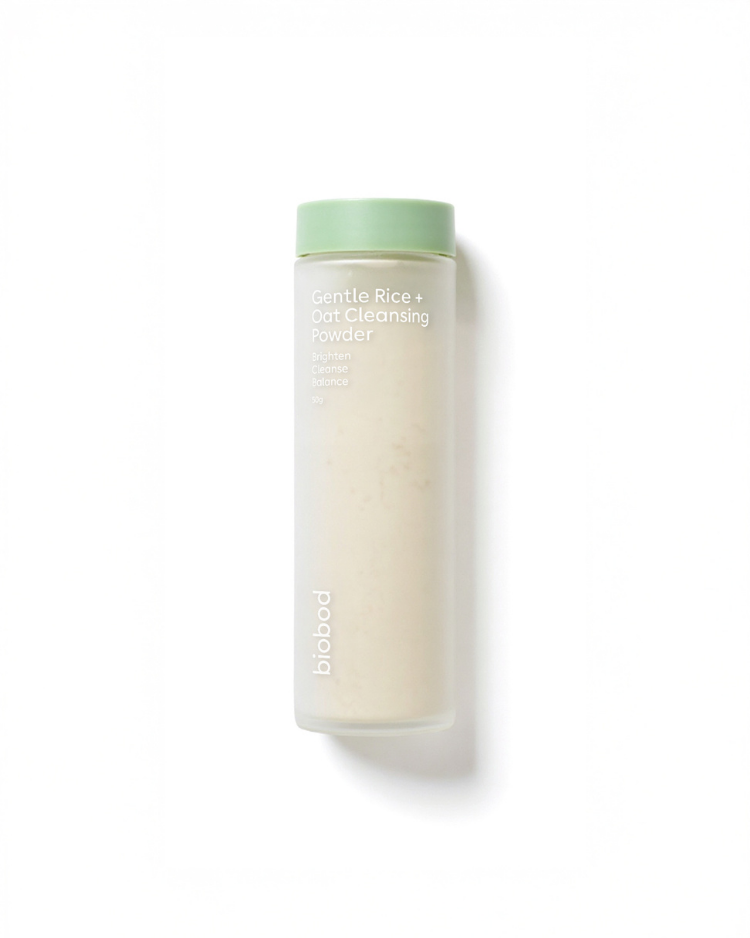
| Oats | Colloidal oatmeal to soothe and protect while you cleanse; oat kernel oil to nourish | Gentle Rice + Oat Cleansing Powder, Calming Balance Cleanse Bar, Barrier Restore Nutrient Oil |
| Brown rice | Rice bran and rice powder for a gentle polish and brighter-looking skin | Gentle Rice + Oat Cleansing Powder |
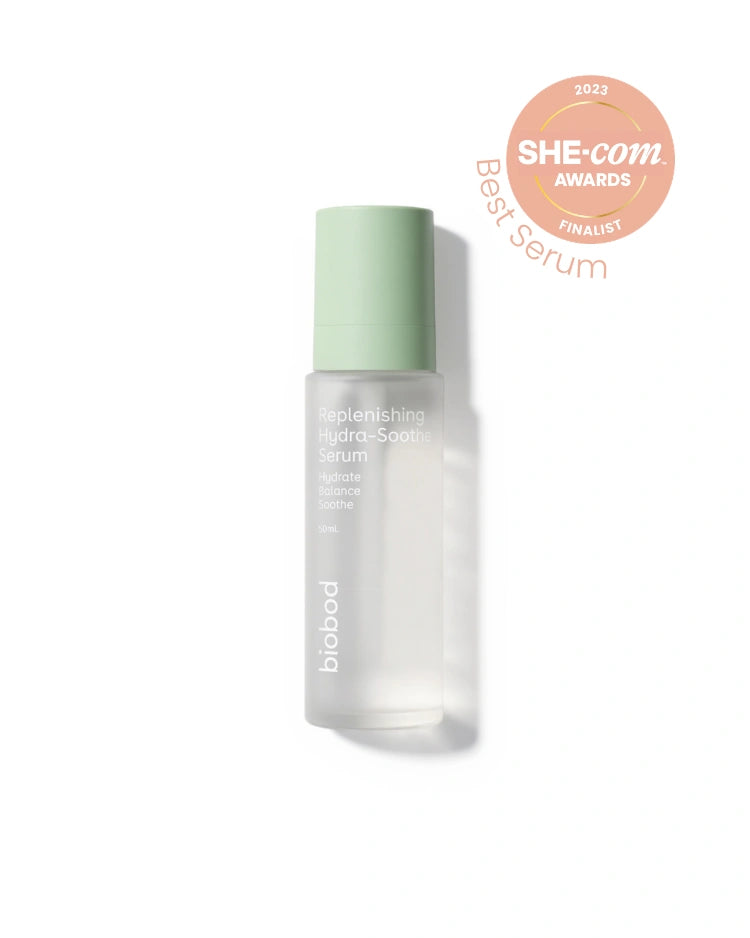
| Garlic, onion, leek (inulin) | Inulin, a prebiotic that helps support a balanced skin microbiome | Replenishing Hydra-Soothe Serum, Gentle Rice + Oat Cleansing Powder |
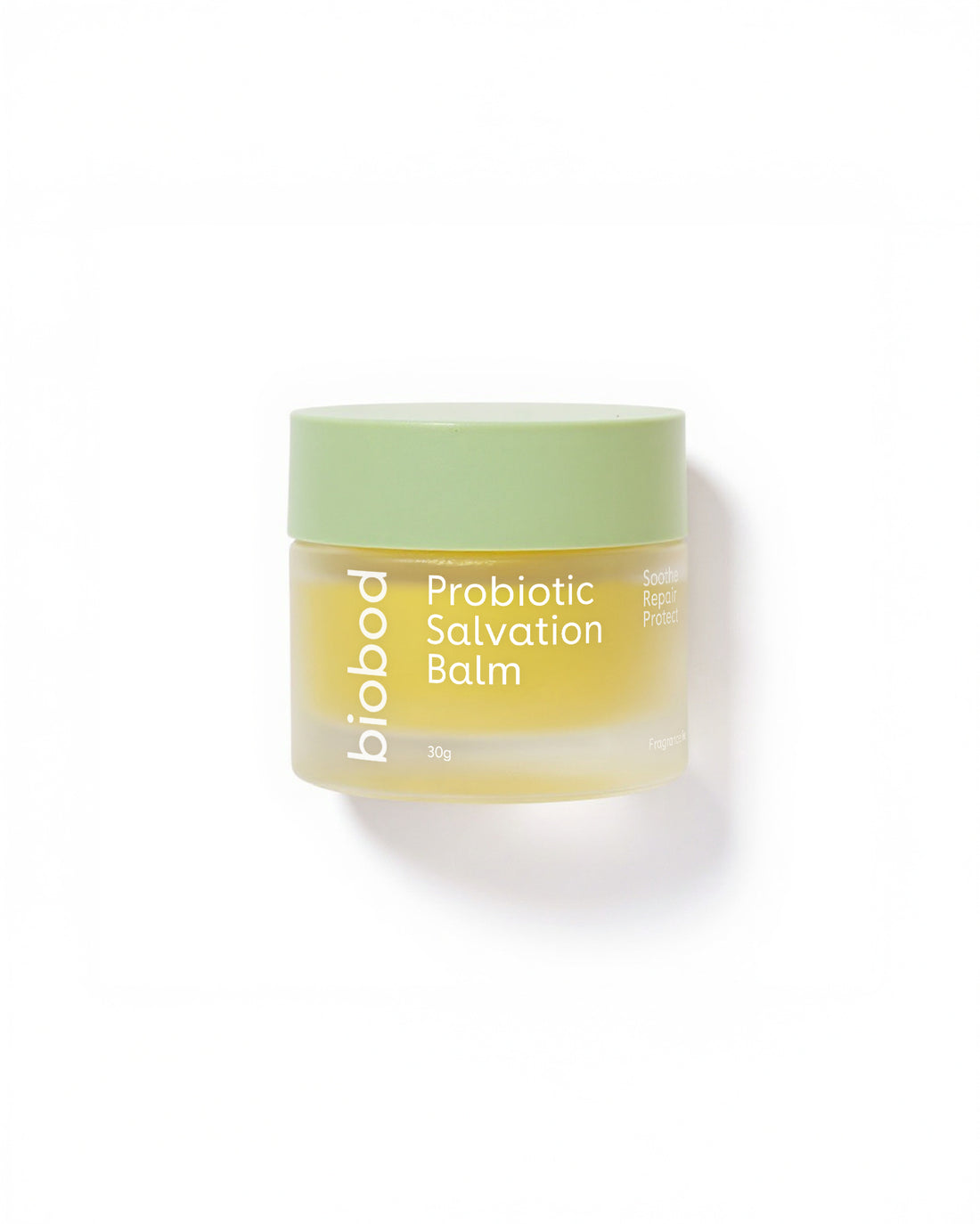
| Yoghurt, kefir, kimchi | The probiotic ingredient SymReboot™ L19, plus lactic acid (a postbiotic) | Probiotic Salvation Balm, Gentle Rice + Oat Cleansing Powder |
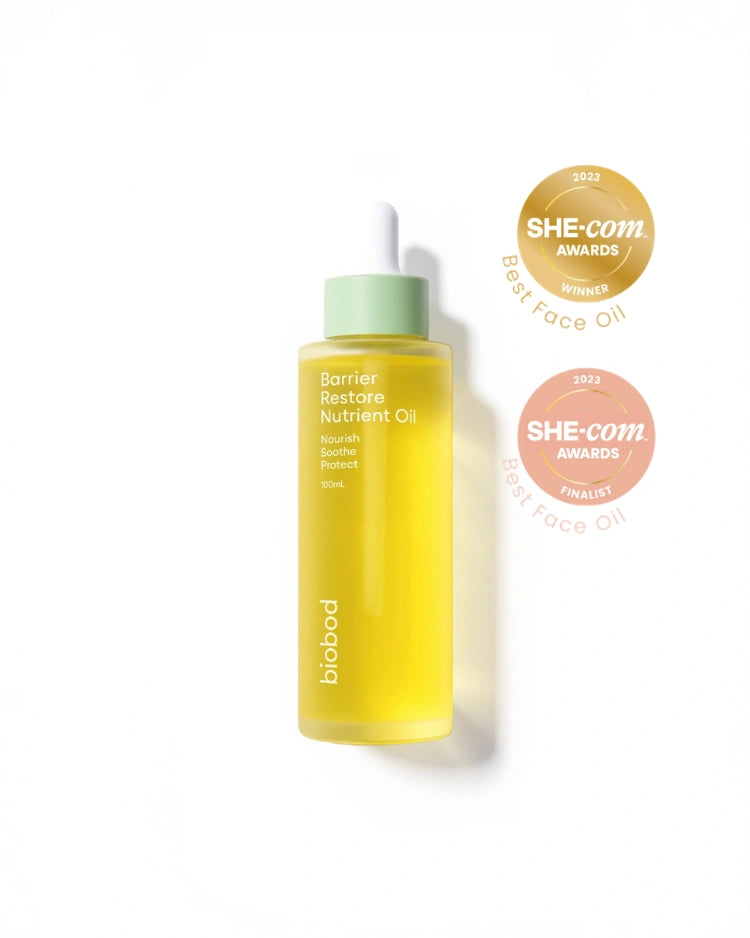
| Oily fish, hemp seeds | Super Omega Complex (grape, hemp, tea, meadowfoam and oat kernel oils) to nourish dry skin | Barrier Restore Nutrient Oil |
| Olives and olive oil (squalene) | Sugarcane-fermented squalane, the stable, skin-friendly form of squalene | Barrier Restore Nutrient Oil |
| Almonds, sunflower seeds (vitamin E) | Vitamin E and totarol, antioxidants that help protect skin from everyday environmental stress | Barrier Restore Nutrient Oil (nut oil-free) |
| Green tea | Green tea to help skin feel calm | Replenishing Hydra-Soothe Serum |
| Leafy greens | Centella asiatica (gotu kola, a leafy green eaten across South-East Asia) to soothe | Replenishing Hydra-Soothe Serum, Calming Balance Cleanse Bar |
| Turmeric | Turmeric, an antioxidant-rich botanical that helps skin feel calm | Gentle Rice + Oat Cleansing Powder |
| Eggs, legumes (amino acids) | Arginine, an amino acid | Calming Balance Cleanse Bar |
| Water and water-rich foods | Hyaluronic acid and glycerin draw water into the outer layer; a face oil seals it in | Glow Set (serum + oil) |
Some nutrients only come from food. There's no topical vitamin C, zinc or carotenoids in our range, so those are your plate's job. That's the point of inside-out care: food and skincare each do the part they're best at.
To understand why we build every formula around the skin microbiome, read about The Biome Advantage™.
What to eat and drink in a day for healthy skin
Here's what a simple skin-friendly day can look like:
- Breakfast: oat porridge with turmeric, berries and a spoonful of yoghurt. Try our Golden Turmeric & Oat Porridge or the Morning Magic Smoothie.
- Lunch: a big salad with leafy greens, tomato, capsicum, chickpeas, avocado and olive oil.
- Snack: a small handful of walnuts or almonds and a piece of fruit. More ideas in our best snacks for sensitive skin.
- Dinner: salmon or tofu with brown rice, roast pumpkin and broccoli, plus a forkful of kimchi or sauerkraut.
- Drinks: water through the day, and green tea if you like it.
Want a full week mapped out, with a vegetarian swap for every meal? Our 7-day meal plan for healthy skin has you covered.
Wondering whether drinking more water will change your skin? It helps your whole body, but your skin's outer layer stays hydrated mainly through a healthy barrier. Here's how to hydrate skin properly from the outside.
Foods to go easy on
Healthy skin is about what you add more than what you cut out. Still, a few foods are worth keeping to "sometimes":
- Sugary drinks and lollies: high sugar intake is linked with glycation, a process that affects collagen. More in our guide to the effects of sugar on skin.
- Highly refined carbohydrates: white bread, pastries and many packaged snacks.
- Ultra-processed foods: they tend to crowd out the whole foods your skin needs.
- Alcohol: it's dehydrating and can make redness more noticeable.
There's no need to be strict. Eating well most of the time is what makes the difference.
When to get personal advice
This guide is general information, not a personal eating plan. If you have food allergies, a medical condition, are pregnant or breastfeeding, or have a skin concern that's persistent or worrying, talk to your GP, a dermatologist or an Accredited Practising Dietitian.
Recommended biobod products
Food takes care of the inside. These take care of the outside, gently, with the same kind of ingredients.

Start here
Discovery Set
Trial sizes of our cleanser, serum, oil and balm. Introduce them one at a time and see how your skin responds. $25
Shop now
Oats, rice and turmeric
Gentle Rice + Oat Cleansing Powder
10% colloidal oatmeal, rice bran, turmeric and prebiotic inulin. Cleanses without stripping. $65
Shop now
Hydrate + seal
Glow Set: Hydrate & Nourish
Our oil-free hydrating serum plus an omega-rich face oil with squalane to seal it in. $136
Shop nowRelated reading
- How to Get Healthy Skin: The Complete Guide
- The Gut–Skin Axis, Explained (+ Recipe)
- How to Get a Healthy Glow (Not Just "Glass Skin")
- Nourishing Your Skin from Within: Anti-Inflammatory Foods
- Best Antioxidants for Skin
FAQs
Does diet really affect your skin?
Yes. Your skin needs vitamins, minerals, healthy fats and protein to function normally, and it gets them from food. Research also links eating more fruit and vegetables with a healthier-looking skin tone, and your gut health with how your skin looks and feels.
How long does it take for diet changes to show on your skin?
Usually four to six weeks. Your skin renews its outer layer roughly every month, and one study found fruit and vegetable intake changed skin colour within about six weeks. Consistency matters more than perfection.
What is the best fruit to eat for healthy skin?
There's no single best fruit, but berries, citrus, kiwi fruit and Kakadu plum are standouts for vitamin C, which your skin needs for normal collagen formation. Mango, papaya and rockmelon add carotenoids. Aim for two serves of fruit a day.
What should I eat for a healthy skin barrier?
Eat foods rich in linoleic acid and omega-3s, such as sunflower seeds, walnuts, hemp seeds, chia and oily fish, plus vitamin E from almonds and avocado, and enough protein. Pair this with a gentle, non-stripping skincare routine.
Do I need supplements for healthy skin?
Most people can get what their skin needs from a varied diet. Supplements are regulated by the TGA and can interact with medicines, so speak to your GP or an Accredited Practising Dietitian before starting one.
Is what you put on your skin as important as what you eat?
They do different jobs. Food supports your skin from the inside; skincare looks after the outer layer, where your barrier and skin microbiome live. A good diet can't undo a harsh cleanser, and a great serum can't replace good food. Keep both simple and gentle.
Look after the outside, too
You've sorted your plate. Try our gentle, fragrance-free routine for $25, one product at a time.
Try the Discovery SetReferences
- National Health and Medical Research Council. Australian Dietary Guidelines. Eat For Health.
- Whitehead RD, Re D, Xiao D, Ozakinci G, Perrett DI. You are what you eat: within-subject increases in fruit and vegetable consumption confer beneficial skin-color changes. PLoS One. 2012;7(3):e32988.
- Pullar JM, Carr AC, Vissers MCM. The roles of vitamin C in skin health. Nutrients. 2017;9(8):866.
- Cosgrove MC, Franco OH, Granger SP, Murray PG, Mayes AE. Dietary nutrient intakes and skin-aging appearance among middle-aged American women. Am J Clin Nutr. 2007;86(4):1225-1231.
- Purba MB, Kouris-Blazos A, Wattanapenpaiboon N, et al. Skin wrinkling: can food make a difference? J Am Coll Nutr. 2001;20(1):71-80.
- Salem I, Ramser A, Isham N, Ghannoum MA. The gut microbiome as a major regulator of the gut-skin axis. Front Microbiol. 2018;9:1459.
- Cancer Council Australia. Sun safety.