
Last updated: September 2026 · Estimated reading time: 9 minutes
By Natalie, Founder of biobod
You apply a new skincare product and something doesn't feel right.
Maybe your face starts stinging. Perhaps it becomes red, itchy or unusually sensitive. Or a product you've used before suddenly feels uncomfortable.
The immediate question is usually:
Is my skin simply irritated, or am I having an allergic reaction to skincare?
They are not the same thing, and it isn't always possible to tell the difference by looking at your skin alone.
Cosmetic irritation can happen when a product or routine overwhelms the skin, particularly after over-exfoliation, frequent use of strong actives or combining too many products. An allergic reaction involves the immune system and requires a different level of caution.
This guide explains some of the differences you may notice, what to do when a skincare product suddenly irritates your skin and, importantly, when you should stop troubleshooting your routine and seek professional advice.
Key takeaways
- Skin irritation and an allergic reaction to skincare are not the same thing.
- Irritation can occur when a product directly overwhelms or disrupts the skin.
- An allergic reaction involves an immune response to a substance.
- Stinging does not automatically mean you are allergic to a product.
- A product you previously tolerated can sometimes begin causing problems.
- Stop using a suspected product rather than continuing to test it on irritated skin.
- Significant swelling, hives, blistering, a spreading rash or worsening symptoms require professional assessment.
- Difficulty breathing or swelling of the mouth, tongue or throat requires urgent medical attention.
Table of contents
- What is the difference between skincare irritation and an allergic reaction?
- What can skincare irritation feel like?
- What can an allergic reaction to skincare look like?
- Skin irritation vs allergic reaction: quick comparison
- Why does skincare suddenly sting?
- Can you suddenly react to skincare you've used before?
- What should you do if a skincare product irritates your skin?
- When should you seek professional help?
- When can you start skincare again?
- A simple biobod option for irritated-feeling skin
- FAQs
Editorial note
This article is intended to help you understand general differences between mild cosmetic irritation and symptoms that may need medical assessment. It cannot determine whether you have an allergy, dermatitis, chemical burn or another medical skin condition.
What is the difference between skincare irritation and an allergic reaction?
The words irritation and allergy are often used interchangeably when talking about skincare, but they describe different processes.
Irritation occurs when something directly aggravates the skin.
This may happen after using an exfoliating product too frequently, combining several strong active ingredients, over-cleansing or applying a formula your skin simply does not tolerate well.
An allergic reaction involves your immune system responding to a substance it has become sensitised to.
The important part is that you cannot reliably diagnose the difference yourself simply by looking at redness in the mirror.
Some symptoms can overlap.
If you are unsure what is happening, particularly if symptoms are significant or persistent, a healthcare professional is better placed to assess it.
What can skincare irritation feel like?
Cosmetic irritation can present differently from person to person, but you may notice changes such as:
- Stinging when a product is applied
- A burning or hot sensation
- Redness
- Dryness
- Tightness
- Flaking
- Skin feeling unusually tender or sensitive
- Products you normally tolerate suddenly feeling uncomfortable
Context can provide useful clues.
For example, if you recently increased your retinol use, combined exfoliating acids, started using a peel or added several active products at once, irritation may be associated with your routine becoming too intensive.
Our guide to skin irritated from too many actives explains what to do when this happens.
What can an allergic reaction to skincare look like?
An allergic skin reaction may involve redness and itching, which is one reason it can be difficult to distinguish from irritation without professional assessment.
Symptoms that should make you more cautious include:
- Significant itching
- Noticeable swelling
- Hives or raised welts
- A rash that extends beyond where the product was applied
- Blistering
- Symptoms that continue to worsen after the product has been removed
These symptoms do not prove that you have an allergy, but they are a reason to stop experimenting with skincare and seek appropriate medical advice.
Skin irritation vs allergic reaction: what is the difference?
| What you're noticing | Cosmetic irritation may involve | Reason to seek medical advice |
|---|---|---|
| Stinging | Can occur after strong actives, over-exfoliation or on sensitised skin. | Severe, persistent or worsening burning or pain. |
| Redness | May occur with irritation. | Significant, spreading or persistent redness or rash. |
| Dryness and flaking | Common when skin has been over-exfoliated or feels barrier-compromised. | Extensive peeling, blistering, weeping or severe pain. |
| Itching | Mild irritation can sometimes feel itchy. | Significant itching, hives or a spreading rash. |
| Swelling | Not something to dismiss as routine skincare sensitivity. | Seek medical advice, particularly for significant or rapidly developing swelling. |
This table is a guide, not a diagnostic tool. Symptoms overlap and a healthcare professional may need to assess your skin to determine what is happening.
Why does skincare suddenly sting your face?
Stinging does not automatically mean you are allergic to a skincare product.
It can also happen when your skin has become more sensitised than usual.
For example, you might have tolerated a moisturiser perfectly for months. Then after several nights of exfoliating acids or retinol, the same moisturiser suddenly stings.
The moisturiser may not necessarily be the original problem.
Your skin may simply be in a more reactive state.
This is why looking at your whole routine matters.
Think about what changed in the days or weeks before the reaction:
- Did you introduce a new product?
- Did you increase how often you use an active?
- Did you combine products you previously used separately?
- Have you been exfoliating more frequently?
- Did you change cleanser?
- Did you start several new products at once?
If your entire routine suddenly seems uncomfortable, read our guide to sensitive skin vs sensitised skin.
Can you suddenly react to skincare you've used before?
Yes, but there are several possible explanations and they are not all allergies.
Your skin's tolerance can change when it becomes sensitised or irritated.
A formula that previously felt comfortable may sting when applied to skin that has recently been over-exfoliated or otherwise stressed.
There may also have been another change in your routine occurring at the same time.
On the other hand, allergic contact reactions can develop after previous exposure to an ingredient.
That is another reason not to assume that a sudden reaction is simply a “damaged barrier” or try to diagnose it yourself.
How do you know which skincare product is irritating your skin?
If you started five products in the same week, it can be extremely difficult to know.
This is one of the strongest arguments for introducing skincare slowly.
If mild irritation develops:
- Stop the new or suspected product.
- Consider whether several strong products have been used together.
- Strip your routine back rather than immediately adding something new.
- Wait until your skin feels comfortable before experimenting again.
- Introduce products individually in future so reactions are easier to identify.
If you repeatedly react to skincare and cannot identify the cause, a dermatologist or other appropriate healthcare professional may be able to investigate further.
What should you do if a skincare product irritates your skin?
First, stop using the suspected product.
Do not keep applying it because you've been told that discomfort means the product is “working”.
Then simplify.
If the reaction appears mild and cosmetic rather than medical, consider temporarily pausing:
- Retinol and other strong actives
- AHA and BHA exfoliants
- Peels
- Face scrubs
- Exfoliating masks
- Strong treatment serums
- New products you have not previously tested
Use a small number of gentle products your skin already tolerates.
If your reaction followed an overloaded active routine, our guide to how long skin takes to recover from too many actives explains what to look for as it settles.
Myth: If skincare tingles or burns, it means the active ingredients are working.
Fact: Discomfort is not a measure of skincare effectiveness. Persistent stinging, burning or increasing irritation is a reason to stop and reassess the product rather than pushing through it.
Should you put another skincare product on irritated skin?
Be careful about immediately adding something new.
When skin becomes irritated, there is a natural urge to search for the strongest barrier cream, calming serum or “rescue” treatment you can find.
But introducing several unfamiliar formulas can make it even harder to understand what your skin tolerates.
If your symptoms are mild and appear consistent with cosmetic irritation, focus on a small number of gentle, familiar products.
If your skin is significantly swollen, blistered, weeping, covered in hives or developing a spreading rash, this is not the time to trial a new cosmetic product. Seek professional advice.
When should you see a doctor about a skincare reaction?
Seek professional medical advice if you experience:
- Significant facial or eye swelling
- Hives
- A spreading or worsening rash
- Blistering
- Weeping or crusting skin
- Severe pain or burning
- Symptoms that persist despite stopping the suspected product
- Repeated reactions that you cannot identify
Seek urgent medical attention for difficulty breathing, wheezing, faintness or swelling involving the lips, tongue, mouth or throat.
If you're unsure whether you're experiencing irritation, an allergy, dermatitis or another skin condition, don't rely on skincare marketing or an online symptom list to diagnose it.
When can you start using skincare again after irritation?
If you're dealing with mild cosmetic irritation, wait until your skin feels comfortable with a simple routine before introducing additional products.
Useful signs include:
- Basic skincare no longer stings
- Persistent tightness has reduced
- Dryness and flaking have settled
- Redness is closer to your usual baseline
- Your skin generally feels comfortable again
Then introduce products slowly.
One product. One change. Give your skin time.
This makes it easier to recognise which products genuinely suit your skin.
A simple biobod option for mild irritated-feeling skin
If your skin feels dry, rough or irritated after an overloaded skincare routine and you are dealing with mild cosmetic irritation rather than a suspected allergic or medical reaction, simplicity is the priority.
At biobod, when skin is flaring, our approach is to strip the routine back and begin with one soothing, protective step before slowly reintroducing other products.
Keep it simple
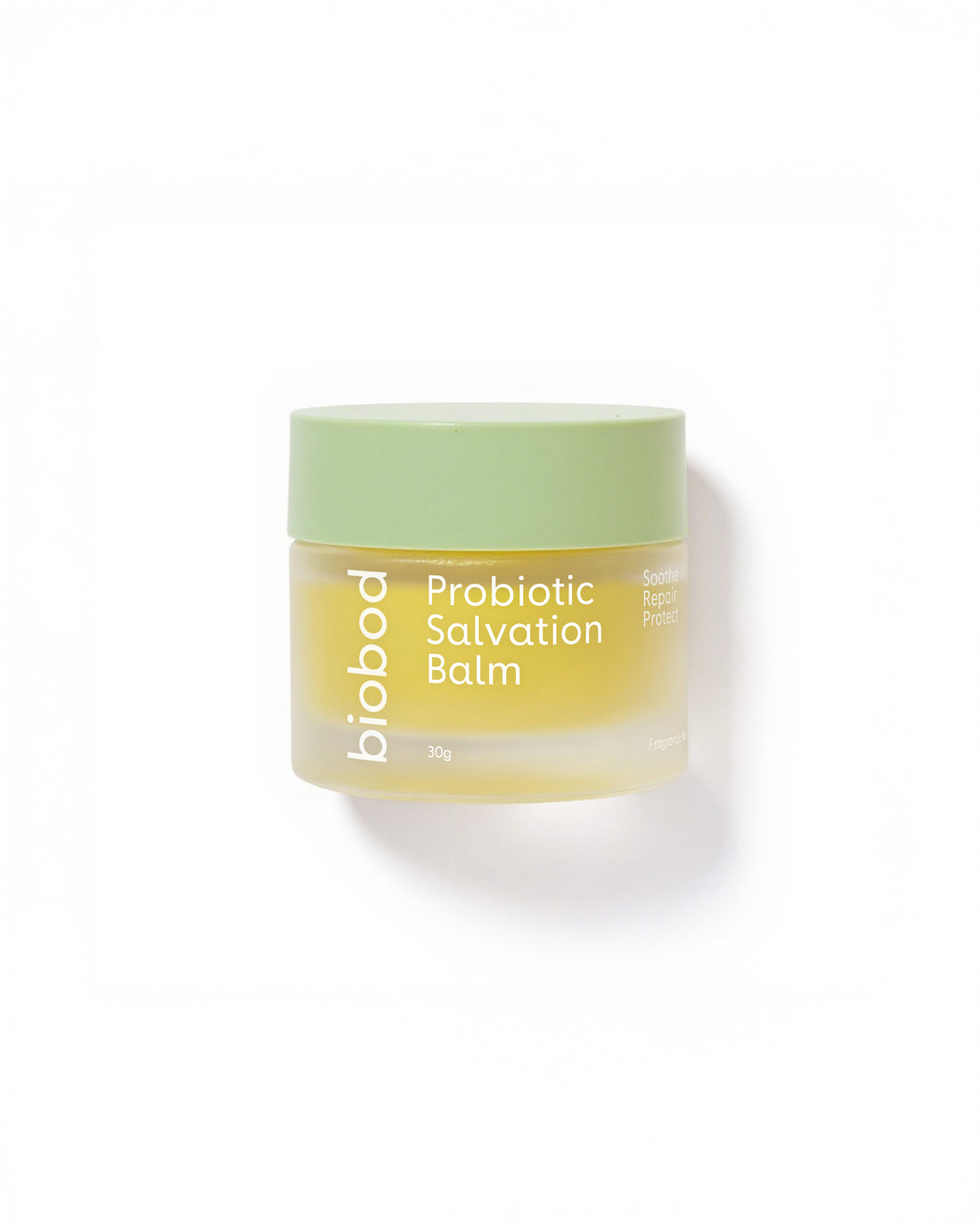
Probiotic Salvation Balm

Best for: Dry, rough, sensitive and irritated-feeling skin.
A rich protective balm designed to comfort dry and reactive-feeling skin when your normal routine feels like too much.
Discover the Salvation BalmPlease note: Probiotic Salvation Balm is a cosmetic skincare product for dry and irritated-feeling skin. It is not a treatment for allergic reactions, dermatitis, chemical burns, hives or other medical skin conditions.
Sometimes your skin is asking you to stop
When a skincare product causes a reaction, it is tempting to immediately start investigating ingredients, buying barrier products and trying to fix your skin overnight.
Start somewhere simpler.
Stop the suspected trigger. Strip the routine back. Watch what your skin does.
If it settles, reintroduce products slowly.
If it doesn't, or the symptoms suggest something more significant than mild cosmetic irritation, speak with a healthcare professional.
Your skincare routine should not require you to tolerate ongoing discomfort.
Related reading
- Skin Irritated From Too Many Actives? How to Calm It Down
- How Long Does Skin Take to Recover From Too Many Actives?
- Sensitive Skin vs Sensitised Skin
- Common Skin Irritants in Skincare
- What Is the Skin Barrier and How Can You Protect It?
FAQs
How do I know if skincare is irritating my skin?
Possible signs of cosmetic irritation include stinging, burning, redness, tightness, dryness, flaking and increased sensitivity after using a product. These symptoms can have other causes, however, so persistent or significant reactions should be professionally assessed.
How can you tell the difference between skin irritation and an allergic reaction?
You cannot always reliably tell from appearance alone because symptoms can overlap. Irritation can involve stinging, burning, dryness and redness, while significant itching, swelling, hives or a spreading rash may warrant greater concern. A healthcare professional should assess significant, persistent or worsening symptoms.
What does an allergic reaction to skincare look like?
Possible allergic skin reactions can involve itching, redness, swelling, hives or a rash, but appearance alone cannot confirm an allergy. Stop using the suspected product and seek medical advice if you think you may be experiencing an allergic reaction.
Why does my skincare suddenly sting?
Your skin may have become sensitised after over-exfoliation, using strong actives too frequently or combining too many products. A product you normally tolerate can sometimes sting when the skin is already irritated. Persistent or severe stinging should not be ignored.
Can you suddenly become allergic to a face cream you've used before?
It is possible for allergic contact reactions to occur after previous exposure, but a sudden reaction can also have other explanations, including sensitised or irritated skin. If you repeatedly react to a product or suspect an allergy, stop using it and seek professional advice.
Should you keep using skincare if it stings?
Persistent stinging or burning is not something you need to tolerate to make a skincare product work. Stop the suspected product and allow your skin to settle. Seek professional advice if symptoms are severe, persistent or worsening.
How long does skincare irritation last?
There is no universal timeline. Mild cosmetic irritation may begin to settle after the triggering product is removed, while more sensitised skin can take longer. Read our guide to how long skin takes to recover from too many actives for a more detailed explanation.
What should I put on an allergic reaction to skincare?
An allergic reaction should not be self-treated with a cosmetic skincare recommendation. Stop using the suspected product and seek advice from a pharmacist, doctor or other qualified healthcare professional about appropriate care.
This article provides general educational information and is not medical advice. It cannot diagnose an allergy, dermatitis, chemical burn or other medical skin condition. Seek professional medical advice for significant, persistent or worsening symptoms and urgent medical attention for breathing difficulties or swelling involving the mouth, tongue or throat.