
Last updated 10 October 2026 · 11 minute read
By Natalie, Founder of biobod
Paraben-free skincare is made without parabens, a family of preservatives that has been used in cosmetics for more than 70 years. Paraben-free does not mean preservative-free, and it is not automatically gentler. For sensitive skin, how the whole formula is built matters far more than one badge on the front of the pack. This guide explains what parabens are, what the evidence says, and how to choose well.
Key takeaways
- Parabens are preservatives. Their job is to stop bacteria, yeast and mould growing in a product after you open it.
- Parabens are permitted in cosmetics at regulated levels, and allergic reactions to them are uncommon.
- Paraben-free is a formulation choice, not a safety guarantee. Most water-based paraben-free products use a different preservative instead.
- Waterless products, such as face oils, balms and powders, can often be made without any added preservative.
- To check a product, read the ingredient list on the back, not the claims on the front. Parabens end in "-paraben" or appear as "hydroxybenzoate".
- For sensitive skin, fragrance, essential oils, drying alcohols and harsh cleansers are usually bigger watch-outs than parabens.
Table of contents
- What does paraben-free mean in skincare?
- What are parabens and why are they used?
- Are parabens bad for your skin?
- How do you know if a product is paraben-free?
- Paraben-free vs preservative-free: what's the difference?
- What replaces parabens in paraben-free products?
- Is paraben-free skincare better for sensitive skin?
- How to choose paraben-free skincare in Australia
- Why we choose not to use parabens
- How biobod formulates
- FAQs
What does paraben-free mean in skincare?
Paraben-free means a product has been formulated without any ingredient from the paraben family, such as methylparaben, ethylparaben, propylparaben or butylparaben. That is all the claim means. It tells you which preservative a brand chose not to use. It does not tell you what the brand used instead, or whether the product suits your skin.
There is no special certification behind a paraben-free label in Australia. Like any marketing claim, it must be true and must not mislead under Australian Consumer Law, but brands self-declare it. That is why the ingredient list is always the more reliable guide.
What are parabens and why are they used?
Parabens are a group of preservatives made from para-hydroxybenzoic acid. They have been used in cosmetics, foods and topical medicines for decades because they are effective at low levels, inexpensive and work against a broad range of microbes.
Any product that contains water needs protecting. Once a jar or bottle is opened, fingers, air and the bathroom environment introduce bacteria, yeast and mould. Without a preservative system, a water-based cream or serum can become contaminated well before you finish it, and contaminated skincare is a genuine risk for skin.
The parabens you are most likely to see on a label are:
- Methylparaben
- Ethylparaben
- Propylparaben
- Butylparaben
Are parabens bad for your skin?
For most people, no. Parabens are permitted in cosmetics at set limits, and they are one of the least common causes of skin allergy among preservatives. The picture is more nuanced than either "toxic" or "totally harmless", so here is what the evidence actually shows.
Why did parabens get a bad reputation?
Two things shaped public opinion. A small UK study published in 2004 detected parabens in 20 samples of breast tumour tissue. It measured their presence, but it did not show that parabens caused the tumours, and the authors did not claim it did. Separately, laboratory studies found that some parabens have weak oestrogen-like activity. That second finding led European regulators to review the whole group.
What do regulators say?
In 2014 the European Union set out the following rules:
- Methylparaben and ethylparaben are permitted up to 0.4% on their own, or 0.8% when combined.
- Propylparaben and butylparaben are limited to 0.14% combined, and are not allowed in leave-on products designed for the nappy area of children under three.
- Five less-studied parabens (isopropyl-, isobutyl-, phenyl-, benzyl- and pentylparaben) are no longer permitted in cosmetics.
In Australia, the chemicals used in cosmetics are regulated by the Australian Industrial Chemicals Introduction Scheme (AICIS), and every cosmetic sold here must list its ingredients under the ACCC's mandatory ingredient labelling standard. That labelling rule is what makes it possible to check any product yourself.
Can parabens irritate sensitive skin?
It is possible but uncommon. Across 50 years of patch-testing studies, around 1.2% of people tested reacted to parabens, and that figure is likely higher than today's real rate. Dermatologists call this the "paraben paradox": parabens are used very widely, yet reactions are rare. In 2019 the American Contact Dermatitis Society went as far as naming parabens its "Non-Allergen of the Year".
Where paraben reactions do occur, they are most often seen on skin that is already broken or inflamed. If you think a product is causing a reaction, stop using it and speak with your GP or a dermatologist, who can arrange patch testing to find the actual trigger.
Myth
"Paraben-free means chemical-free and non-toxic."
Fact
Everything in skincare is a chemical, including water, plant oils and vitamin E. "Chemical-free" and "non-toxic" have no regulated meaning for cosmetics. A more useful question is whether each ingredient suits your skin.
How do you know if a product is paraben-free?
Turn the pack over and read the full ingredient list. In Australia it must be on the label or, for some small items, on a nearby display. You are looking for two patterns:
- Any ingredient ending in "-paraben", for example methylparaben or propylparaben.
- Any ingredient containing "hydroxybenzoate", for example methyl 4-hydroxybenzoate, which is another name for methylparaben.
If neither appears, the product is very likely paraben-free. If you need certainty, for example because you have a diagnosed paraben allergy, ask the brand directly. Botanical extracts are sometimes supplied with their own small amount of preservative, and a transparent brand will be able to tell you.
Want a cheat sheet for the shops? Our free Clean Beauty Ingredient Checklist for Sensitive Skin covers parabens alongside the ingredients sensitive skin reacts to most.
Paraben-free vs preservative-free: what's the difference?
These labels are often treated as the same thing, but they describe very different formulas.
| Label | What it means | Is it still preserved? | What to check |
|---|---|---|---|
| Paraben-free | Made without parabens | Usually yes, with a different preservative | Which preservative replaced the parabens |
| Preservative-free | No added preservative at all | No | That the product is waterless, or comes in single-use or airless packaging |
| Waterless (anhydrous) | No water in the formula, such as oils, balms and powders | Often not needed, as microbes need water to grow | Antioxidants such as vitamin E to keep oils fresh, and keep water out of the jar |
| Self-preserving | Water-based, but protected by multifunctional ingredients rather than a traditional preservative | Yes, by ingredients that also hydrate or condition | Glycols such as 1,2-hexanediol or caprylyl glycol, and the period after opening |
Caution
"Preservative-free" is not automatically safer. A water-based cream with no protection at all can grow bacteria and mould once opened. If a water-based product claims to be preservative-free, look for airless or single-use packaging, and follow its use-by guidance closely.
What replaces parabens in paraben-free products?
When a brand removes parabens from a water-based product, it has to protect the formula another way. The most common options are:
- Phenoxyethanol. The most widely used paraben alternative. We explain it in detail in Phenoxyethanol in skincare: is it safe for sensitive skin?
- Organic acids and their salts, such as sodium benzoate and potassium sorbate. These work best in slightly acidic formulas.
- Multifunctional glycols, such as 1,2-hexanediol, caprylyl glycol and pentylene glycol. These hydrate the skin and also help keep a formula fresh.
- Isothiazolinones, such as methylisothiazolinone (MI). MI is a well-known skin sensitiser and was named "Allergen of the Year" by the American Contact Dermatitis Society in 2013, so sensitive skin may want to check for it.
- Going waterless. Oils, balms and powders give microbes very little to grow in, which can remove the need for a preservative entirely.
This is why a paraben-free badge on its own tells you so little. Swapping parabens for a known sensitiser would not be an improvement for reactive skin.
Is paraben-free skincare better for sensitive skin?
Not on that basis alone. The ingredients that most often bother sensitive and reactive skin are:
- fragrance, whether synthetic or natural
- essential oils
- drying alcohols, such as alcohol denat.
- harsh sulphate cleansers, such as sodium lauryl sulfate
- strong actives used without barrier support
Parabens rarely make that list. You can read more in our guides to skincare ingredients to avoid for sensitive skin, alcohol in skincare and sulphate-free skincare.
So why do so many people with sensitive skin prefer paraben-free products? Usually because they want simpler formulas with fewer additives overall, and paraben-free often goes hand in hand with that approach. That is a perfectly reasonable preference. Just judge the whole formula rather than the badge. If your skin has become reactive recently, it may be sensitised rather than sensitive, which changes what it needs.
Green flag
A brand that publishes its full ingredient list online and explains how each product is kept fresh. Transparency about preservation is a better sign of a thoughtful formula than any single "free from" claim.
How to choose paraben-free skincare in Australia
Use this checklist in store or online:
- Read the back, not the front. Check the ingredient list for "-paraben" and "hydroxybenzoate".
- Find out what replaced the parabens. Is the product waterless, self-preserving or protected by another preservative? If it uses methylisothiazolinone, sensitive skin may want to pass.
- Look at the whole formula. Fragrance-free and essential-oil-free matter more for reactive skin than paraben-free alone.
- Check the period after opening. The small open-jar symbol with a number, such as "6M" or "12M", tells you how many months the product stays fresh once opened.
- Favour transparent brands. Full ingredient lists online and clear answers to preservation questions are good signs.
- Introduce one product at a time. Patch test on a small area for a few days before using a new product all over your face.
- Be wary of fear-based marketing. Claims like "toxin-free" or "no nasties" are not regulated and say little about how a product will suit your skin.
Why we choose not to use parabens
Parabens are among the most widely used preservatives in the world. Studies have found them in the majority of cosmetics, and they are also used in some foods and topical medicines.
That is exactly why we leave them out. Limits are set product by product, but nobody uses just one product. A normal day might include a cleanser, moisturiser, sunscreen, body lotion, shampoo, conditioner and makeup, and there is no practical way to add up how much of a single preservative you are putting on your skin across all of them.
We believe the simplest way to take the guesswork out of that is to leave parabens out of our own formulas altogether. This is a precautionary choice we have made for our range, not a claim that parabens are unsafe at the levels regulators allow. It also suits how we formulate: when a product is waterless, it does not need a traditional preservative in the first place.
How biobod formulates
We created biobod for the most sensitive skin, so we keep our formulas short and our preservation simple. Every biobod product is formulated without parabens, and we publish the full ingredient list on every product page.
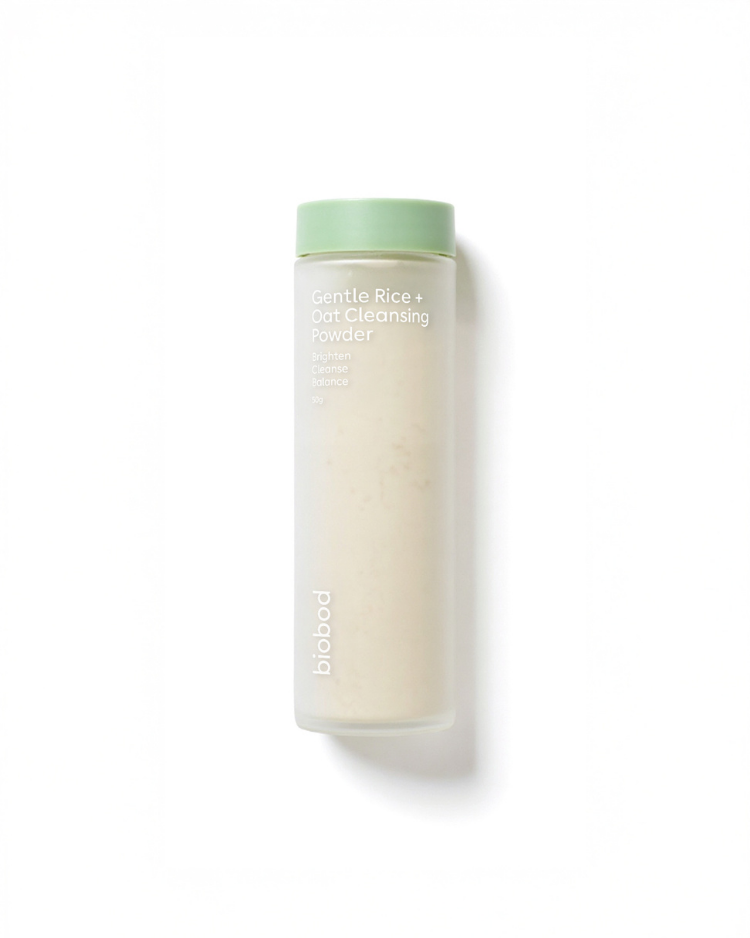
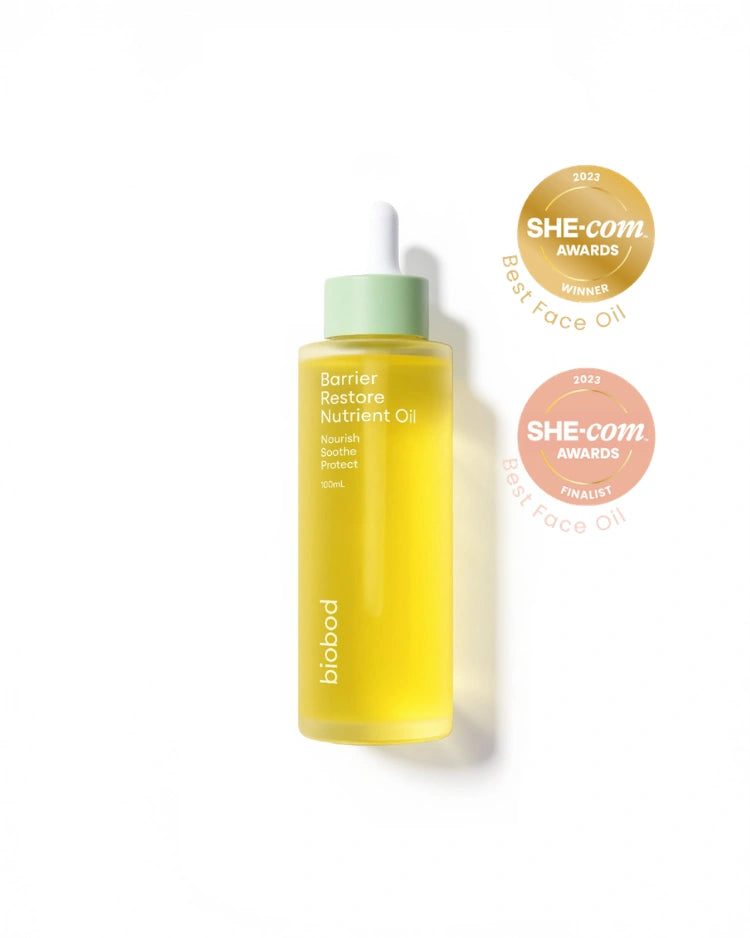
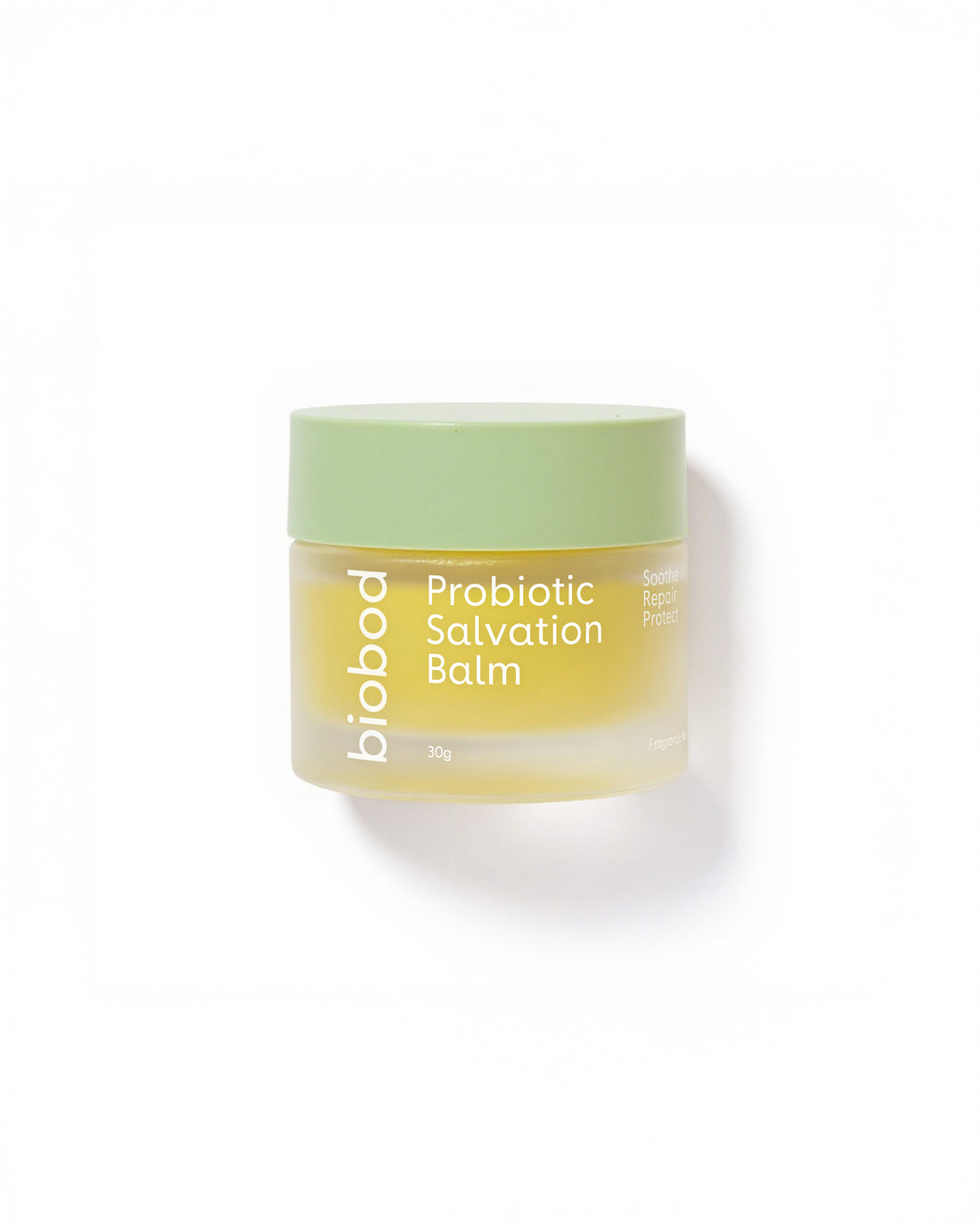
- Waterless where possible. Our Barrier Restore Nutrient Oil, Probiotic Salvation Balm and Gentle Rice & Oat Cleansing Powder contain no water, and use antioxidants such as vitamin E and totarol to keep the oils fresh.
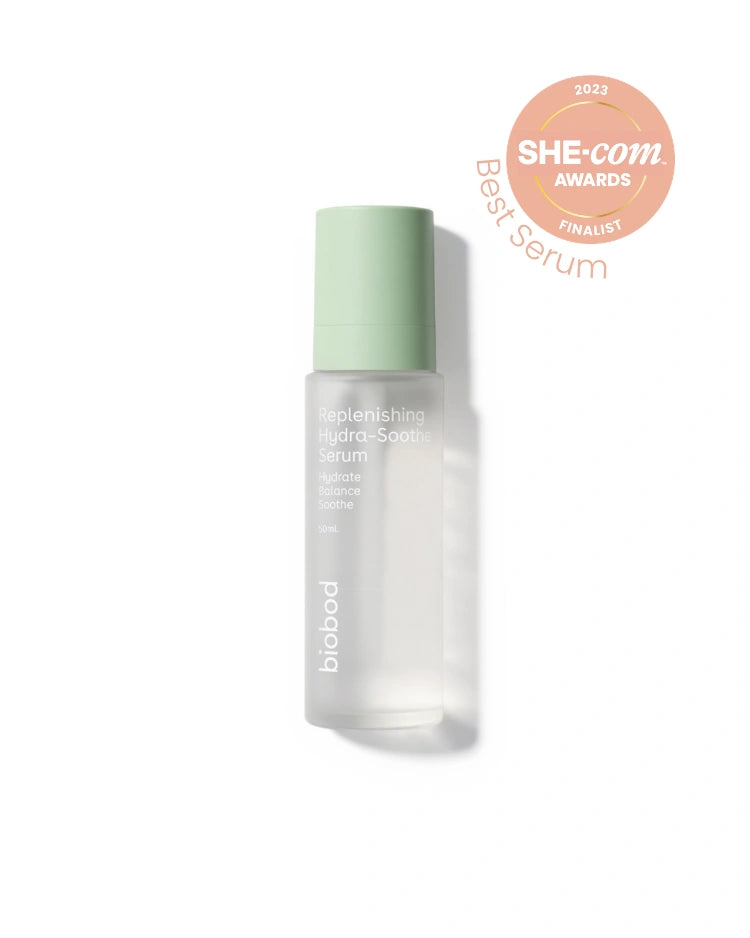
- Self-preserving when water is needed. Our Replenishing Hydra-Soothe Serum is our only water-based leave-on product. It uses multifunctional glycols that hydrate the skin while keeping the formula fresh.
- Nothing sensitive skin doesn't need. Our range is fragrance-free, essential-oil-free and made in Australia.
Read more about the thinking behind this in our guide to a waterless skincare routine and how to get healthy skin.
Recommended biobod products
Start here
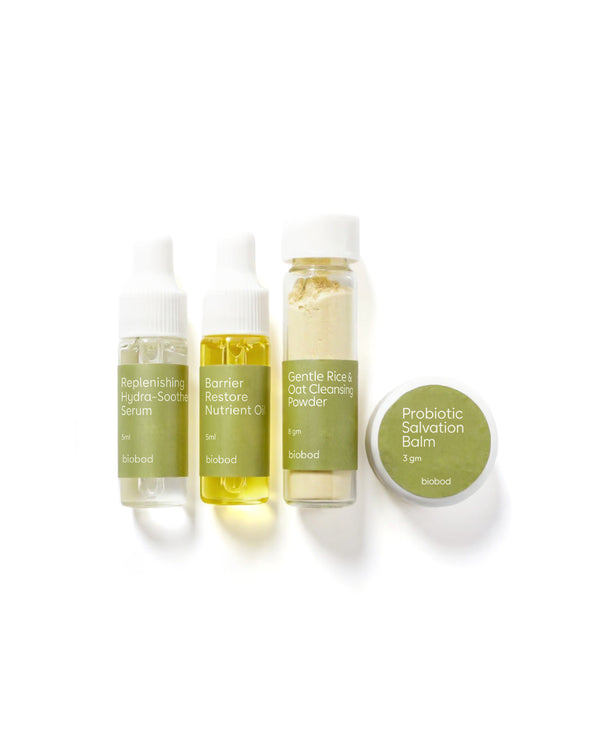
Discovery Set
Trial sizes of all four paraben-free steps, so you can patch test one product at a time.
Try it for $25Waterless

Barrier Restore Nutrient Oil
A waterless blend of plant squalane and omega-rich oils to seal in hydration and support your barrier.
Shop the oilPreservative-free

Probiotic Salvation Balm
A rich, waterless balm for dry, uncomfortable areas, made without preservatives or fragrance.
Shop the balmRelated reading
- Phenoxyethanol in Skincare: Is It Safe for Sensitive Skin?
- Alcohol in Skincare: Which Alcohols Dry Your Skin and Which Ones Help It
- Sulphate Free Skincare: Skin Does Better Without It
- Fragrance-Free Skin Care Products for Sensitive Skin
- Common Skin Irritants in Skin Care
FAQs
What does paraben-free mean?
Paraben-free means a product is made without parabens, a family of preservatives that includes methylparaben, ethylparaben, propylparaben and butylparaben. It does not mean the product is preservative-free. Most water-based paraben-free products use a different preservative instead.
Should I avoid parabens in skincare?
Not necessarily. Parabens are permitted in cosmetics at regulated levels and are among the least common causes of skin allergy. Many people choose paraben-free products as part of a simpler routine. If your skin reacts to a product, a GP or dermatologist can patch test to find the actual trigger.
Is paraben-free the same as preservative-free?
No. Paraben-free products usually contain another preservative, such as phenoxyethanol or sodium benzoate. Preservative-free products contain no added preservative at all, which is only appropriate for waterless formulas or products in single-use or airless packaging.
How can I tell if a product is paraben-free?
Read the ingredient list on the back of the pack. Look for any ingredient ending in "-paraben" or containing "hydroxybenzoate". If neither appears, the product is very likely paraben-free. Ask the brand if you need certainty.
Do paraben-free products go off faster?
Not necessarily. A well-formulated paraben-free product is tested to stay fresh for its stated life. Check the period-after-opening symbol (for example "12M"), keep lids closed, and use clean, dry hands or a spatula with jars.
Why doesn't biobod use parabens?
Parabens are used in so many everyday products that it is hard to know how much you are applying across your whole routine. We chose to leave them out of our formulas as a precaution, and to keep things simple. It is a formulation choice, not a claim that parabens are unsafe at permitted levels.
Are biobod products paraben-free?
Yes. Every biobod product is formulated without parabens. Our oil, balm and cleansing powder are waterless, and our serum uses a gentle self-preserving system. The full ingredient list is on every product page.
Try a simple, paraben-free routine
Our $25 Discovery Set gives you trial sizes of all four steps, so you can patch test and introduce one product at a time. Backed by our 30-day Happiness Guarantee.
Shop the Discovery SetThis article is general information only and is not medical advice. If you have a persistent or unusual skin concern, please speak with your GP or a dermatologist.
References
- Commission Regulation (EU) No 1004/2014, amending Annex V to Regulation (EC) No 1223/2009 on cosmetic products (parabens). legislation.gov.uk/eur/2014/1004
- Commission Regulation (EU) No 358/2014, amending Annexes II and V to Regulation (EC) No 1223/2009 on cosmetic products. legislation.gov.uk/eur/2014/358
- DermNet. Allergy to parabens. pro.dermnetnz.org/topics/allergy-to-parabens
- Product Safety Australia (ACCC). Cosmetics ingredients labelling mandatory standard. recalls.gov.au/standards/cosmetics-ingredients-labelling
- Darbre PD et al. Concentrations of parabens in human breast tumours. Journal of Applied Toxicology, 2004;24(1):5–13. centaur.reading.ac.uk/10465
- Methylisothiazolinone named 2013 Contact Allergen of the Year. pubmed.ncbi.nlm.nih.gov/23340392